Why Some Children Struggle With Using Utensils Independently During Meals and What It Means for Development
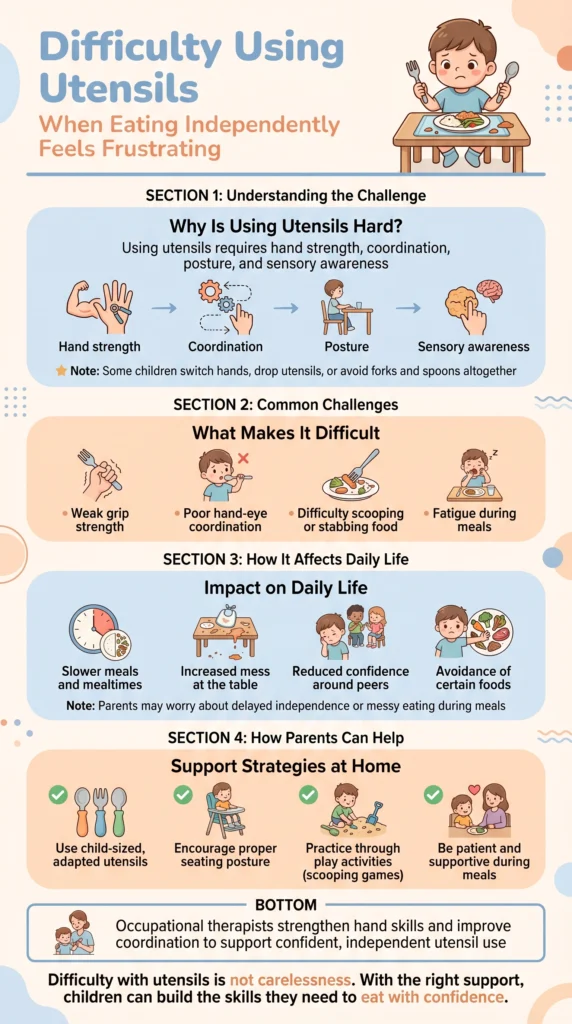
For many children, learning to use spoons and forks is a key milestone in gaining independence. However, for some, this seemingly simple skill can feel frustrating and overwhelming. Using utensils requires a combination of hand strength, coordination, posture, and sensory awareness. When any of these skills are still developing, children may find it difficult to eat neatly or efficiently. Parents often notice signs such as switching hands frequently, dropping utensils, or avoiding them altogether. Meals may become messy, slow, or stressful. While this can raise concerns about delayed independence, it is important to understand that these challenges are usually linked to skill development rather than unwillingness. Children who struggle with utensils are often putting in extra effort just to control their movements. This can lead to fatigue and reduced motivation, especially during longer meals.
Common Reasons Why Children Have Difficulty Using Spoons and Forks Effectively
There are several underlying factors that can make utensil use challenging for children. These difficulties are often related to fine motor skills and coordination.
- Weak grip strength, making it hard to hold utensils firmly
- Poor hand-eye coordination, affecting accuracy while scooping or stabbing food
- Difficulty managing wrist and finger movements for controlled actions
- Fatigue during meals due to increased effort in maintaining control
These challenges can make even simple eating tasks feel complicated. As a result, children may avoid using utensils or rely on their hands instead.
How Difficulty With Utensils Impacts Daily Eating Habits and Confidence in Children
When children struggle to use utensils, it can affect more than just mealtime. Eating may take longer, leading to frustration for both the child and caregivers. Increased mess during meals can also draw attention, which may make the child feel self-conscious. Over time, children may begin to lose confidence in their ability to eat independently. They might avoid certain foods that are harder to manage, such as rice, pasta, or mixed textures. This can limit their diet and reduce opportunities to practice important skills. In social settings like school or family gatherings, these difficulties may become more noticeable. Children may feel embarrassed or hesitant to eat in front of others, which can impact their social participation.
Why Developing Fine Motor Skills Early Improves Independent Eating in Kids
Fine motor skills play a crucial role in utensil use. These skills involve small muscle movements in the hands and fingers, which are essential for gripping, lifting, and controlling objects. When these muscles are not strong or coordinated enough, tasks like eating become more difficult. Supporting fine motor development early helps children gain better control and confidence. As their skills improve, they can perform tasks more smoothly and with less effort. This not only enhances their ability to eat independently but also supports other activities such as writing, drawing, and dressing. Consistency and practice are key. With the right support, children can gradually build the strength and coordination needed for successful utensil use.
Simple and Effective Parent Strategies to Help Children Improve Utensil Skills at Home
Parents can create a supportive environment that encourages skill development without adding pressure. Small adjustments can make a big difference in how children experience mealtime.
- Use child-sized utensils that are easier to hold and control
- Encourage proper seating posture to improve stability and coordination
- Practice hand skills through play activities like stacking, squeezing, or scooping
- Be patient and supportive, allowing the child to learn at their own pace
These strategies help children feel more comfortable and confident while practicing their skills.
How Occupational Therapy Supports Children in Mastering Utensil Use With Confidence
When difficulties persist, professional support can be highly beneficial. Occupational therapists focus on strengthening hand muscles, improving coordination, and teaching effective movement patterns. Therapy sessions often include targeted exercises and playful activities designed to build the skills needed for utensil use. Children learn in a structured yet engaging environment, which helps reduce frustration and increase motivation. With consistent guidance and practice, most children can develop the ability to use utensils more effectively. As their skills improve, they gain independence, confidence, and a more positive experience during meals. By understanding the reasons behind utensil difficulties and offering supportive strategies, caregivers can help children move toward successful and enjoyable independent eating.