Why Packing a School Bag Feels Overwhelming for Children With Organization and Executive Function Challenges
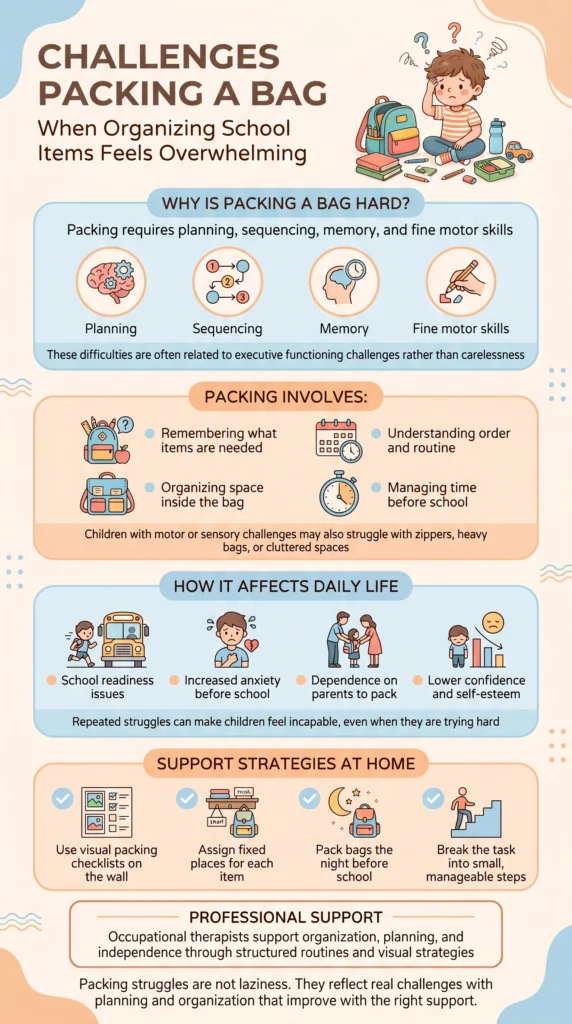
Packing a school bag may look like a simple daily habit, but for many children, it can feel confusing and stressful. This task requires multiple skills working together, including planning, sequencing, memory, and fine motor coordination. When any of these areas are still developing, children may struggle to complete the task efficiently. Parents often notice signs such as forgotten books, misplaced items, or last-minute rushing before school. Some children may pack their bags randomly without a clear system, while others may avoid the task altogether. These challenges are not due to laziness or carelessness. Instead, they are often linked to difficulties in executive functioning, which controls how the brain organizes and manages tasks. Children may also experience emotional reactions like frustration or anxiety during packing time. When they feel overwhelmed, even a small task can seem too difficult to handle.
Common Reasons Why Children Struggle With Packing School Bags and Staying Organized
There are several reasons why packing a bag can become challenging for children. These difficulties often involve both cognitive and physical skills.
- Trouble remembering what items are needed for school each day
- Difficulty understanding the correct order of packing tasks
- Challenges with organizing space inside the bag
- Limited ability to manage time effectively, especially in the morning
In addition, some children may face motor or sensory challenges. Tasks like opening zippers, handling heavy bags, or dealing with cluttered spaces can add to the difficulty and increase frustration.
How Difficulty Packing a Bag Affects School Readiness and Emotional Well-Being in Kids
When children struggle with packing their bags, it can impact their daily routines and school readiness. Forgotten items such as books, notebooks, or lunchboxes can create problems during the school day, affecting learning and participation. These repeated challenges can also lead to increased anxiety. Children may worry about forgetting things or feel pressured during rushed mornings. Over time, they may become more dependent on parents to complete the task, reducing opportunities to build independence. Emotionally, children may start to feel less confident in their abilities. Even when they are trying their best, repeated mistakes can make them feel incapable. This can affect their motivation and willingness to take responsibility for daily tasks.
Why Building Organizational Skills Early Helps Children Become Independent and Confident
Learning to organize and manage tasks is an important life skill. When children develop these abilities early, they become more independent and capable of handling daily responsibilities. Packing a school bag is one of the first opportunities for children to practice planning and organization. By learning how to break tasks into steps, remember important items, and manage time, children build skills that extend beyond school. These abilities support academic success, reduce stress, and improve overall confidence. A structured and supportive approach helps children feel more in control. When tasks are predictable and manageable, children are more likely to succeed and develop positive habits.
Simple and Effective Parent Strategies to Help Children Pack Their School Bags Independently
Parents can make packing easier by introducing structure and consistency into the routine. Small changes can significantly reduce stress and improve success.
- Use visual packing checklists to remind children of required items
- Assign fixed places for each item inside the bag
- Encourage packing the bag the night before to avoid morning rush
- Break the task into small, easy-to-follow steps
These strategies help children understand what to do and reduce the feeling of being overwhelmed.
How Professional Support Helps Children Improve Planning, Organization, and Daily Routines
When challenges with packing persist, professional support can provide additional guidance. Occupational therapists work with children to improve executive functioning skills such as planning, sequencing, and organization. Therapy often includes structured routines, visual supports, and hands-on practice to help children learn step by step. Children are guided in a way that builds confidence and reduces frustration. With consistent support and practice, most children can learn to pack their bags more independently. As their skills improve, they experience less stress, better school readiness, and greater confidence in managing daily responsibilities. By understanding the reasons behind these challenges and offering supportive strategies, caregivers can help children develop essential life skills that lead to long-term independence and success.