Why Some Children Struggle With Hair Combing Skills and Avoid Daily Grooming Routines
Hair combing is an important self-care activity, but for many children, it can feel uncomfortable, frustrating, or even painful. This task requires a combination of fine motor control, coordination, and sensory tolerance. When any of these areas are underdeveloped or sensitive, children may resist or completely avoid brushing their hair. Parents often notice tangled hair, repeated refusal to comb, or emotional reactions such as crying or irritability during grooming time. While it may appear like stubbornness, these responses are usually linked to genuine discomfort or difficulty managing the task. For some children, even gentle brushing can feel intense due to heightened sensitivity in the scalp. Understanding the root cause of this behaviour helps caregivers respond with patience and effective strategies. When children feel supported rather than pressured, they are more likely to engage in grooming routines over time.
Common Reasons Why Hair Combing Feels Difficult or Painful for Children
There are several reasons why children may find hair combing challenging. These factors often involve both physical and sensory aspects of development.
- Scalp sensitivity that makes even light touch feel uncomfortable
- Weak hand control, making it hard to hold and move a comb properly
- Poor bilateral coordination, affecting the ability to use both hands together
- Fear of pain due to past experiences with pulling or tangling
Children with sensory sensitivities may perceive brushing as painful even when done gently. This can create a negative association with grooming, making them more resistant each time.
How Difficulty With Hair Combing Affects Hygiene, Confidence, and Daily Routines in Kids
When children avoid combing their hair, it can impact their overall hygiene and self-care habits. Tangled or unkempt hair may lead to discomfort and make grooming even more difficult over time. This can create a cycle where avoidance leads to more challenges. Socially, children may become aware of their appearance and feel self-conscious around peers. This can affect their confidence and willingness to participate in social activities. In school settings or group environments, differences in grooming may sometimes draw unwanted attention. For families, daily grooming struggles can become a source of stress. Repeated resistance and emotional reactions can make mornings or bedtime routines more challenging. Over time, this may affect the overall atmosphere at home.
Why Developing Motor Skills and Sensory Tolerance Improves Independent Hair Care
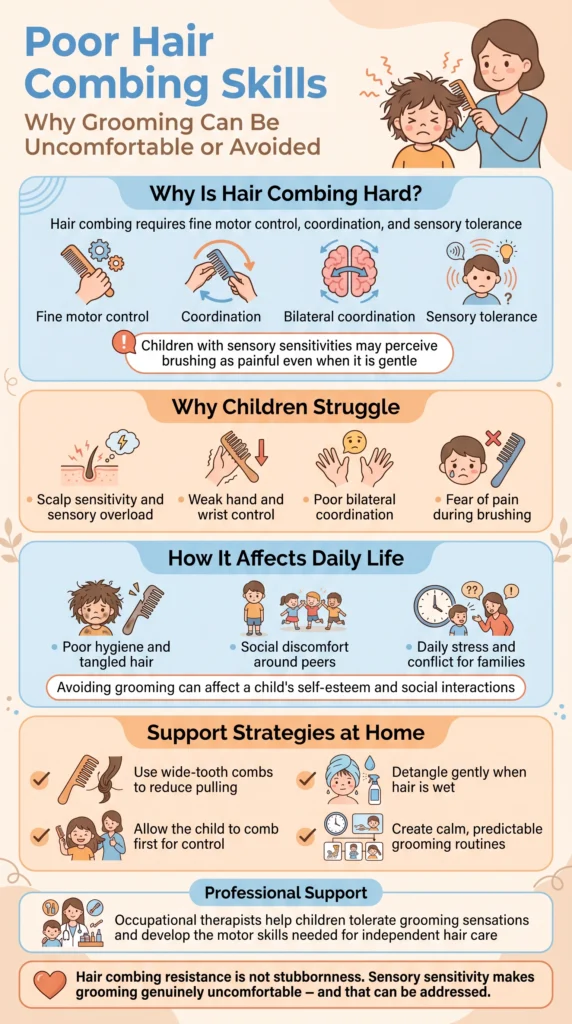
Hair combing is not just about hygiene—it is also a skill that supports independence. Developing fine motor skills helps children control their hand movements, making it easier to handle grooming tools. Improved coordination allows them to manage tasks more efficiently and with less effort. Sensory tolerance is equally important. When children gradually become more comfortable with touch and movement on the scalp, grooming becomes less stressful. This combination of motor and sensory development helps children feel more confident and capable in managing their own care. With consistent practice and a supportive approach, children can learn to perform grooming tasks more independently and with less discomfort.
Simple Parent Strategies to Make Hair Combing Easier and Less Stressful for Children
Parents can make hair care routines more comfortable by adjusting how and when grooming is done. Small changes can reduce resistance and improve cooperation.
- Use wide-tooth combs to gently manage tangles without pulling
- Detangle hair when it is slightly wet to reduce discomfort
- Allow the child to comb their own hair first to build confidence
- Create calm, predictable grooming routines to reduce anxiety
These strategies help children feel more in control and reduce the likelihood of negative reactions.
How Occupational Therapy Helps Children Improve Hair Combing Skills and Sensory Comfort
When hair combing difficulties persist, professional support can be highly beneficial. Occupational therapists work with children to improve both motor skills and sensory tolerance in a structured and supportive way. Therapy may include activities that strengthen hand muscles, improve coordination, and gradually increase tolerance to touch. Children are guided through step-by-step practice, allowing them to build confidence at their own pace. With the right support, most children can learn to manage hair care more comfortably. As their skills improve, grooming becomes less stressful and more routine, supporting better hygiene, confidence, and independence. By understanding the reasons behind hair combing challenges and responding with patience, caregivers can help children develop essential self-care skills that positively impact their daily lives.