Why Some Children Struggle With Proper Handwashing Steps and Hygiene Routines at Home and School
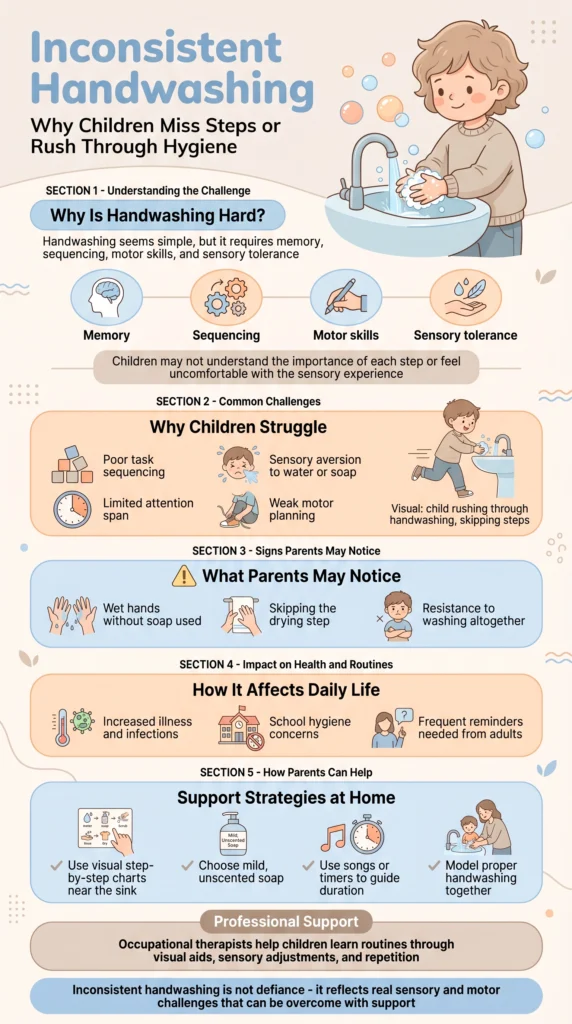
Handwashing is often seen as a basic daily habit, but for many children, it is a complex task that requires multiple skills working together. To wash hands effectively, a child must remember each step, follow the correct sequence, coordinate movements, and tolerate the sensory experience of water and soap. When any of these areas are challenging, handwashing can become inconsistent or incomplete. Parents may notice that their child quickly rinses hands without using soap, skips drying, or rushes through the process without proper cleaning. Some children may resist washing altogether, especially if they find the sensation of water or soap uncomfortable. These behaviours are not simply due to carelessness—they often reflect underlying developmental or sensory challenges. Understanding why handwashing is difficult helps caregivers shift from repeated reminders to more effective support strategies. With the right approach, children can gradually build independence and confidence in maintaining hygiene.
Common Reasons Children Miss Handwashing Steps Including Sensory and Motor Challenges
There are several reasons why children may struggle with consistent handwashing. These challenges often involve a combination of cognitive, sensory, and motor factors.
- Difficulty with task sequencing, leading to missed or mixed-up steps
- Sensory aversion to water, soap texture, or strong smells
- Limited attention span, causing children to rush or lose focus
- Weak motor planning, making it harder to coordinate movements smoothly
Because of these difficulties, children may not fully understand the purpose of each step or may try to finish the task as quickly as possible. Over time, this can turn into a habit of incomplete handwashing.
How Inconsistent Handwashing Affects Children’s Health, Hygiene, and Daily Routines
When handwashing is not done properly, it can impact a child’s overall health and daily life. Hands are a common source of germs, and incomplete cleaning increases the risk of illness. Children may experience more frequent infections, which can affect school attendance and participation in activities. In school environments, poor hand hygiene may also raise concerns among teachers and caregivers. Children may need constant reminders, which can be frustrating for both the child and adults. This repeated prompting can reduce a child’s sense of independence and responsibility. Additionally, rushing through hygiene routines can carry over into other daily habits. Children who struggle with one routine may find it harder to follow others, such as brushing teeth or organizing their belongings.
Why Building Structured Hygiene Habits Early Supports Long-Term Independenc
Developing consistent handwashing habits early in life is important for long-term independence. When children learn to follow routines step by step, they build essential life skills such as organization, responsibility, and self-care. Structured habits also reduce the need for constant supervision. As children become more confident in completing tasks correctly, they rely less on reminders and guidance. This not only improves hygiene but also boosts self-esteem. Creating a supportive learning environment is key. Children respond better when routines are predictable, engaging, and adapted to their individual needs.
Practical Parent Strategies to Improve Handwashing Skills and Consistency in Children
Parents can make handwashing easier and more engaging by using simple, structured techniques that match the child’s learning style.
- Use visual step charts to clearly show each part of the process
- Choose mild, unscented soap to reduce sensory discomfort
- Use songs or timers to guide the duration of washing
- Model proper handwashing so children can learn by observation
These strategies help children understand what to do while making the experience more comfortable and less overwhelming.
How Professional Support Helps Children Master Hygiene Routines With Confidence
When handwashing difficulties persist, professional support can be highly beneficial. Occupational therapists specialize in helping children develop daily living skills through structured and individualized approaches. Therapy may include visual aids, repetition techniques, and sensory adjustments to make the experience more manageable. Children are guided step by step, allowing them to practice and improve in a supportive setting. With consistent practice and the right guidance, most children can learn to complete handwashing routines effectively. Over time, they gain confidence in their abilities and develop habits that support both health and independence. By recognizing the challenges behind inconsistent handwashing and responding with patience, caregivers can help children build strong hygiene skills that last a lifetime.