What Is Assimilation in Children’s Speech and How One Sound Influences Another in Words
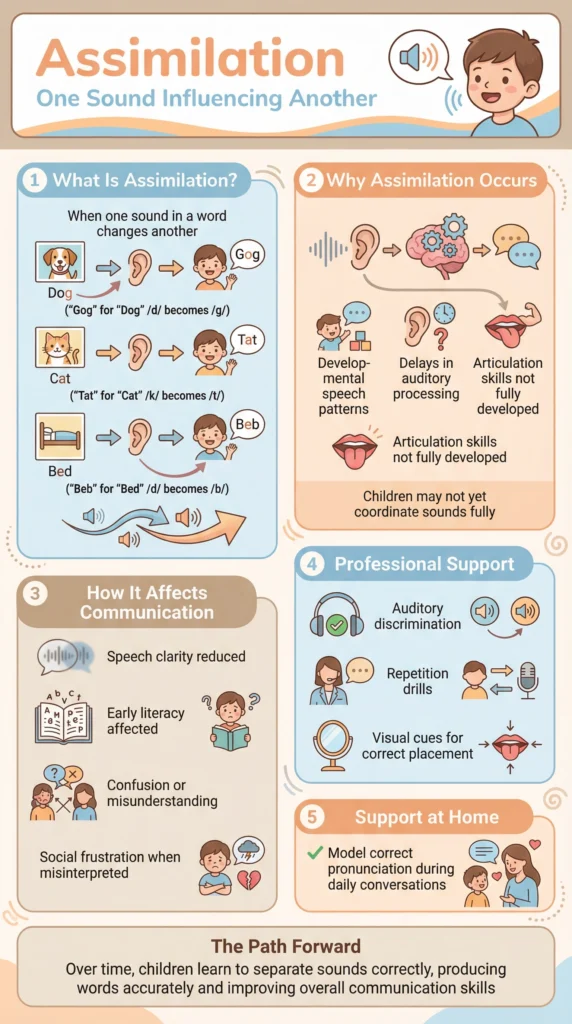
Assimilation is a speech pattern where one sound in a word change or influences another sound. For example, a child may say “gog” instead of “dog,” where the /d/ sound is replaced by /g/ because of the influence of the later sound in the word. This can make speech sound unusual or difficult to understand, especially for people unfamiliar with the child’s speaking style. In early development, some level of sound substitution is normal as children learn to coordinate their speech. However, when assimilation continues beyond expected developmental stages, it may indicate challenges in auditory processing or articulation skills. Children may not yet have the ability to clearly separate and produce individual sounds within a word. Understanding assimilation helps parents and caregivers respond appropriately. Instead of correcting harshly, it is more effective to guide the child gently toward clearer speech patterns.
Common Causes of Assimilation in Speech Development and Why Children Substitute Sounds
Assimilation happens for several reasons related to how children process and produce speech. These causes are often linked to the development of listening and speaking skills.
- Difficulty distinguishing between similar sounds while listening
- Limited coordination of speech muscles for producing multiple sounds
- Delays in auditory processing affecting sound recognition
- Natural simplification of complex words during early development
These factors can cause children to modify words in a way that feels easier for them to say, even if it changes the original sound structure.
How Assimilation Affects Speech Clarity, Understanding, and Early Learning Skills
When assimilation occurs frequently, it can affect how clearly a child communicates. Words may sound distorted or unfamiliar, making it harder for others to understand what the child is trying to say. This can lead to repeated misunderstandings, which may frustrate both the child and the listener. Speech clarity plays an important role in early learning. If a child consistently mispronounces words, it may impact vocabulary development and make it harder to connect spoken words with their correct forms. This can also influence early literacy skills, including reading and spelling, as children rely on accurate sound patterns to learn language. Socially, children may feel discouraged if their speech is often misunderstood. They might avoid speaking in groups or interacting with peers, which can limit communication practice and confidence building.
Real-Life Signs of Assimilation in Children’s Everyday Speech Patterns
Parents may notice assimilation during daily conversations, especially when children attempt longer or more complex words. These patterns can vary but often follow predictable changes in sounds.
- Replacing one sound with another within the same word
- Repeating similar sounds across different parts of a word
- Simplifying multi-syllable words in a consistent pattern
- Producing speech that is difficult for unfamiliar listeners to understand
Recognizing these patterns early allows parents to support improvement before it affects communication more deeply.
Effective Speech Therapy Techniques to Correct Assimilation in Children
Speech therapists use structured methods to help children produce sounds accurately and consistently. These approaches focus on improving both listening and speaking skills. Therapy often includes auditory discrimination exercises, where children learn to hear the difference between similar sounds. Repetition drills are used to strengthen correct pronunciation, while visual cues help children understand where and how to place their tongue and lips for specific sounds. These techniques are introduced gradually, allowing the child to build confidence while improving accuracy.
Simple Parent Strategies to Improve Clear Speech and Sound Separation at Home
Parents can support their child’s speech development through everyday interactions. Consistent and gentle guidance helps children learn without feeling pressured.
- Model correct pronunciation clearly during conversations
- Repeat the child’s words correctly without direct criticism
- Encourage slow and relaxed speaking to improve sound clarity
- Read aloud regularly to expose the child to proper sound patterns
With time, practice, and supportive communication, children can learn to separate sounds more effectively. As their speech becomes clearer, their confidence and ability to interact with others also improve. Early understanding and consistent support play a key role in helping children overcome assimilation and develop strong communication skills.