Understanding Hand Tremors in Children and Why Shaky Hands Affect Everyday ActivitiesUnderstanding Hand Tremors in Children and Why Shaky Hands Affect Everyday Activities
Hand tremors in children can be concerning, especially when they begin to interfere with simple daily tasks. Tremors are involuntary shaking or trembling movements that may appear when a child is using their hands or even when trying to keep them still. While occasional shakiness can be normal in young children, persistent tremors may indicate underlying developmental or coordination challenges. Parents often notice these movements during activities that require control and precision. A child may struggle while eating, colouring, stacking blocks, or holding small objects. In some cases, the trembling becomes more noticeable when the child tries harder to control it, which can lead to frustration and reduced confidence. It is important to understand that tremors are not intentional. Children are not being careless—their nervous system and muscles are still developing or may need additional support to function smoothly.
Common Causes of Hand Tremors in Children Related to Development and Coordination
Hand tremors in children can occur due to a variety of physical and neurological factors. Identifying the possible causes helps parents respond with patience and appropriate support.
- Immature nervous system development affecting movement control
- Weak muscle strength or poor muscle coordination
- Low muscle tone leading to reduced stability in hand movements
- Fatigue or stress increasing shakiness during tasks
- Difficulty with motor planning and precision
These factors are often more noticeable during fine motor tasks that require accuracy. Activities like writing, buttoning clothes, or using utensils can become challenging, making tremors more visible.
How Hand Tremors Impact Fine Motor Skills, Learning, and Confidence in Kids
Tremors can significantly affect a child’s ability to perform fine motor activities. Tasks that require steady hand control may become tiring and frustrating, leading to slower progress in skill development. Children may avoid activities they find difficult, which reduces opportunities for practice and improvement. In school settings, tremors can make handwriting messy or slow, affecting academic performance. At home, simple tasks like eating neatly or playing with small toys may become challenging. Over time, repeated difficulties can impact a child’s confidence and willingness to participate. Emotionally, children may feel embarrassed if others notice their shaky movements. This can lead to withdrawal from group activities or hesitation to try new tasks, further affecting their overall development.
Everyday Challenges Children Face When Hand Tremors Interfere With Routine Tasks
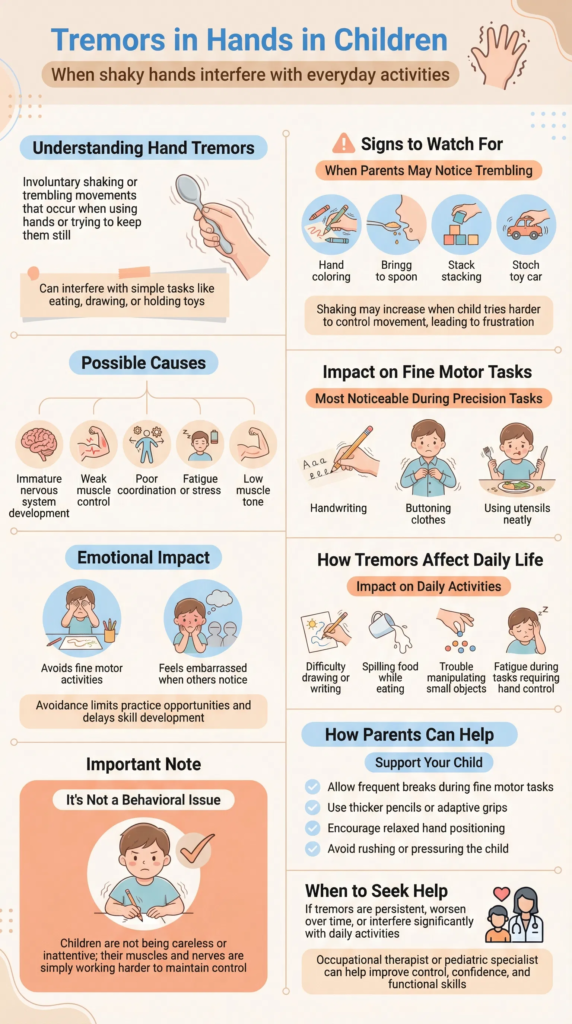
When tremors become more noticeable, they can disrupt many aspects of daily life. These challenges may seem small individually but can add up over time.
- Difficulty drawing, coloring, or writing clearly
- Spilling food while eating due to lack of steady control
- Trouble handling small objects like buttons or toys
- Increased fatigue during tasks that require hand stability
These difficulties highlight the importance of early understanding and support, as they directly affect a child’s independence and daily functioning.
Practical Ways Parents Can Support Children With Hand Tremors at Home
Parents can play a key role in helping children manage tremors and build better control. The focus should be on reducing pressure while encouraging gradual improvement.
- Allow frequent breaks during activities that require fine motor control
- Use thicker pencils, crayons, or adaptive grips for better stability
- Encourage relaxed hand positioning instead of tight gripping
- Avoid rushing or pressuring the child during tasks
Creating a calm and supportive environment helps children feel more comfortable and willing to practice. Small adjustments can make a big difference in improving control and reducing frustration.
When to Seek Professional Help for Persistent Hand Tremors in Children
If hand tremors continue over time, become more severe, or significantly interfere with daily activities, it is important to seek professional evaluation. An occupational therapist or paediatric specialist can assess the child’s motor skills and identify underlying causes. Early intervention focuses on improving muscle strength, coordination, and functional abilities. With the right guidance and consistent practice, many children can gain better control and confidence in their movements. Recognizing hand tremors early and responding with understanding allows children to develop essential skills without fear or pressure. Supportive strategies and timely care can help them navigate daily activities more comfortably and successfully.