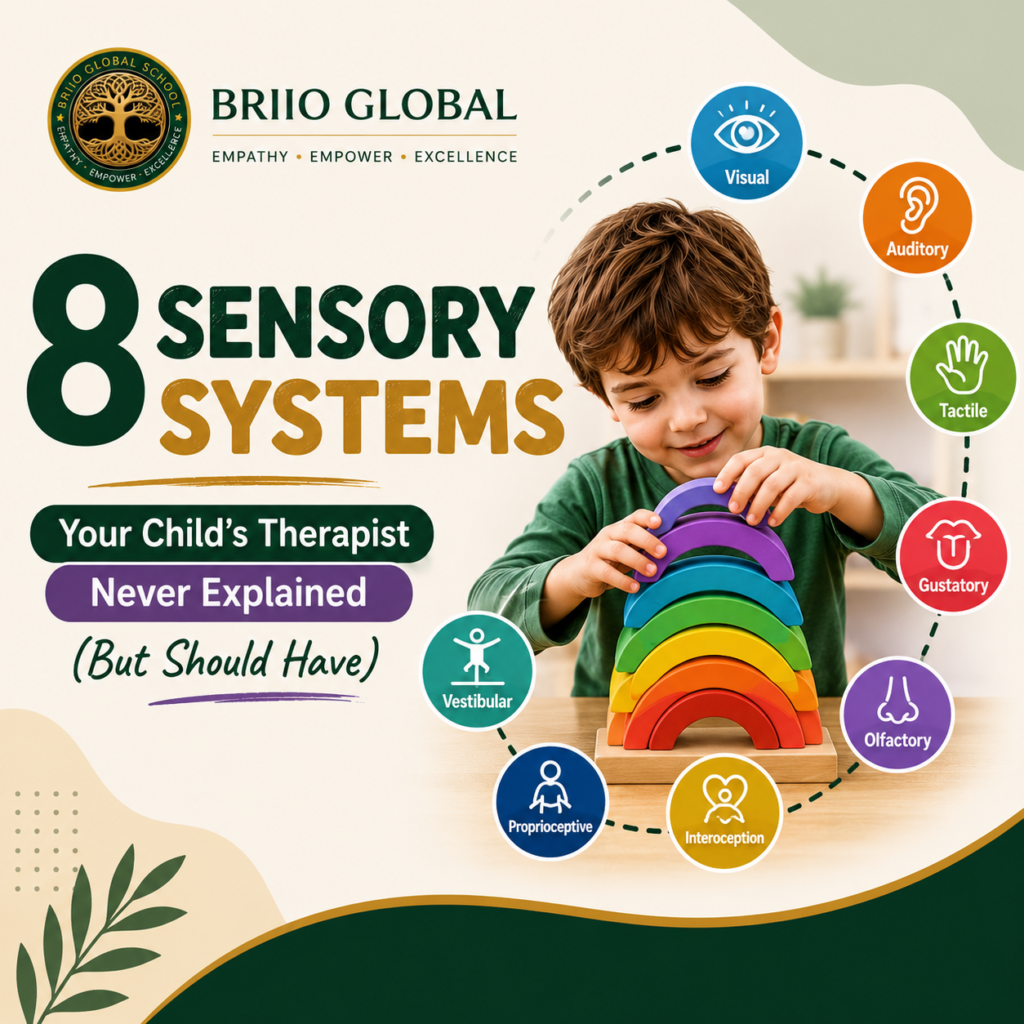
Eight Sensory Systems Your Child’s Therapist Never Explained (But Should Have)
For the longest time, I thought my child was simply “overreacting.” Certain clothes caused meltdowns. Loud places became overwhelming within minutes. Hair brushing felt impossible. Sitting still during homework looked physically painful. And honestly, no one explained why. We kept hearing words like:
“Sensory issues.”
“Sensory seeking.”
“Sensory overload.”
But nobody actually explained what any of it meant in real life. Everything changed when we finally learned about the eight sensory systems. Not just the basic five senses we all learned in school but the hidden sensory systems that affect focus, emotional regulation, movement, coordination, anxiety, sleep, behaviour, and even learning.
The moment we understood how our child’s nervous system worked, parenting became far less confusing. And suddenly, so many “behaviours” started making sense.
Most Parents Only Know 5 Sensory Systems
When people think about senses, they usually think of:
- Sight
- Sound
- Taste
- Touch
- Smell
But neurodivergent children often struggle with sensory processing far beyond those five senses. In reality, there are eight major sensory systems constantly affecting how children experience the world around them. And once parents understand them, they begin seeing behaviour completely differently.
1. Visual System (Sight)
Some children become overwhelmed by bright lights, cluttered classrooms, flashing screens, or visually busy environments. Others constantly seek visual stimulation through spinning objects, fast-moving videos, or repetitive visual patterns. What looks like distraction may actually be visual overload.
2. Auditory System (Sound)
Many neurodivergent children hear sounds much more intensely than others. Vacuum cleaners, hand dryers, crowded classrooms, barking dogs, or multiple conversations happening at once can quickly overwhelm the nervous system. That’s why some children cover their ears, avoid noisy places, or become emotionally dysregulated in loud environments.
3. Tactile System (Touch)
This system affects how children process physical touch and textures. A child may refuse certain fabrics, hate sock seams, avoid messy play, or become distressed during grooming routines like haircuts or nail trimming. To outsiders, these reactions may seem dramatic. But for sensory-sensitive children, the discomfort feels very real.
4. Gustatory System (Taste)
Some children experience food textures, temperatures, or Flavors far more intensely than expected. This is why “picky eating” is often not simply behavioural. Many sensory-sensitive children avoid foods because their nervous system genuinely struggles to process certain textures or sensations safely.
5. Olfactory System (Smell)
Strong smells can instantly trigger overwhelm, nausea, anxiety, or emotional distress in some neurodivergent children. Others actively seek smells for comfort and regulation. This sensory system is deeply connected to emotional memory and nervous system responses.
The Two Sensory Systems Most Parents Never Hear About
These next systems completely changed the way we understood our child’s behaviour. And honestly, I wish someone had explained them sooner.
6. Vestibular System (Balance & Movement)
This system controls balance, movement, spatial orientation, and coordination. Children who constantly spin, jump, crash into furniture, rock back and forth, or struggle to sit still may actually be seeking vestibular input. Others may avoid swings, escalators, climbing, or movement-heavy activities because those sensations feel unsafe or overwhelming. Suddenly, behaviours that once looked “hyperactive” started making neurological sense.
7. Proprioceptive System (Body Awareness)
This system helps children understand where their body is in space.
When this system is dysregulated, children may:
- Bump into objects frequently
- Use too much or too little force
- Seek tight hugs or pressure
- Crash into furniture
- Chew on objects constantly
Many children use heavy movement or deep pressure to help their nervous system feel organized and calm. Once we understood this, we stopped viewing these behaviours as “bad habits.” They were regulation strategies.
8. Interoception (Internal Body Signals)
This is the sensory system almost nobody talks about — yet it affects emotional regulation enormously.
Interoception helps children recognize internal body signals like:
- Hunger
- Thirst
- Fatigue
- Anxiety
- Bathroom needs
- Emotional overwhelm
Some neurodivergent children struggle to recognize these internal cues until the body becomes completely overwhelmed. That’s why some meltdowns appear to happen “out of nowhere.” In reality, the nervous system may have been dysregulated long before the child realized it.
The Biggest Parenting Shift
The biggest breakthrough happened when we stopped asking:
“Why is my child behaving like this?”
And started asking:
“What sensory experience might they be struggling with right now?”
That one shift changed everything. Behaviour became easier to understand. Meltdowns felt less personal. And instead of constantly correcting our child, we started supporting the nervous system underneath the behaviour. That’s when home life slowly became calmer.
What Helped Our Family Most
We didn’t need perfection. We simply needed awareness.
What helped most was:
- Reducing overwhelming environments
- Creating calmer routines
- Allowing safe movement
- Respecting sensory sensitivities
- Giving emotional recovery time
Once our child felt safer inside their body, emotional regulation improved naturally. And honestly, so did our relationship.
Final Thoughts
Many neurodivergent children are not “misbehaving.” They are navigating a world that their nervous system experiences much more intensely than others and once parents understand the sensory systems affecting focus, movement, emotions, and behaviour, parenting starts becoming far less frustrating — and far more compassionate. Because sometimes what looks like “bad behaviour” is actually sensory overload, nervous system dysregulation, or a child trying their best to feel safe.