Attention Span by Age: What’s Normal for Neurodivergent Kids (Chart Included)
One of the biggest fears parents carry today is:
“My child just can’t focus.”
Homework becomes exhausting. Teachers raise concerns. Mealtimes feel chaotic. Even simple daily routines can feel overwhelming when a child struggles to sit still, stay engaged, or follow instructions consistently.
And in a world obsessed with productivity and academic performance, many parents quietly wonder:
“Is something wrong with my child?”
But here’s the truth most people never explain clearly:
Attention span looks very different in neurodivergent children.
Children with ADHD, autism, sensory processing differences, anxiety, or nervous system dysregulation often experience focus differently from neurotypical children. And understanding what’s actually developmentally normal can completely change the way parents respond. Because sometimes the problem isn’t laziness, bad parenting, or lack of discipline. Sometimes the nervous system simply works differently.
What Is a “Normal” Attention Span?
Attention span is not just about sitting still quietly. It’s affected by:
- Age
- Emotional regulation
- Sleep
- Sensory processing
- Anxiety
- Environment
- Movement needs
- Motivation
- Nervous system regulation
Even neurotypical young children are not designed to focus for long periods the way adults expect and neurodivergent children often need movement, novelty, sensory regulation, emotional safety, and nervous system support in order to sustain attention successfully. That’s why comparing your child to rigid academic expectations can create unnecessary stress for both the parent and the child.
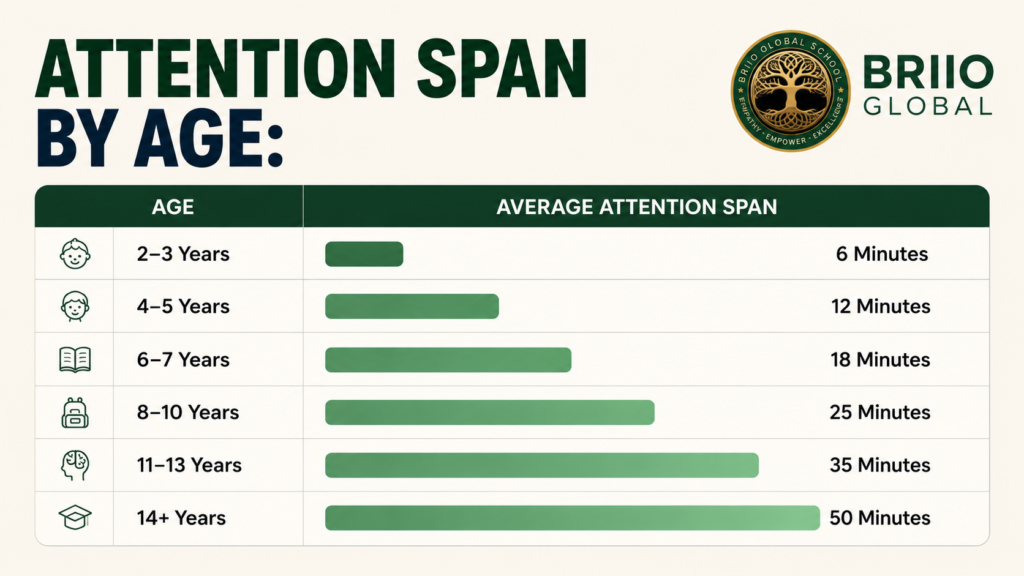
Attention Span by Age (General Guidelines)
The chart below shows approximate average attention spans during structured activities. Neurodivergent children may naturally fall outside these ranges depending on sensory needs, ADHD traits, emotional regulation, and environmental overwhelm.
Average Attention Span by Age
Approximate sustained attention during structured tasks. Neurodivergent children may vary depending on sensory, emotional, and environmental factors.
Average attention span by age Approximate sustained attention during structured tasks. Neurodivergent children may vary significantly depending on sensory, emotional, and environmental factors.
Many parents feel shocked when they realize how short attention spans actually are during childhood — especially for younger or neurodivergent children.
Why Neurodivergent Children Often Struggle With Focus
For many autistic and ADHD children, attention is deeply connected to nervous system regulation. Some children are constantly seeking movement because movement helps their brain stay alert. Others become overwhelmed by noise, visual clutter, uncomfortable clothing, emotional pressure, or sensory overload, making concentration nearly impossible.
What looks like “not paying attention” is often:
- Sensory dysregulation
- Mental fatigue
- Anxiety
- Overstimulation
- Movement needs
- Emotional overwhelm
- Executive functioning struggles
Once parents understand this, focus problems stop feeling personal and parenting becomes far less frustrating.
The Biggest Mistake Many Adults Make
One of the biggest mistakes adults make is assuming attention problems are always behavioural. But many neurodivergent children are actually trying very hard to focus. Their nervous system simply becomes overwhelmed faster. That’s why forcing stillness, constant correction, yelling, or punishment often backfires. The more stressed the nervous system becomes, the harder focus becomes too.
The breakthrough for our family happened when we stopped asking:
“Why can’t my child focus?”
And started asking:
“What support does my child’s nervous system need right now?”
That one shift changed everything.
What Actually Helps Improve Attention Naturally
The goal should not be forcing children to sit perfectly still for unrealistic lengths of time. The real goal is helping the nervous system feel safe, regulated, and engaged. What helped our child most was:
- Reducing overwhelming environments
- Allowing movement breaks
- Creating predictable routines
- Using visual supports
- Lowering emotional pressure
- Supporting sensory needs
- Breaking tasks into smaller pieces
Ironically, once we stopped fighting movement constantly, focus actually improved. Because many neurodivergent children focus better when the nervous system is supported instead of controlled.
Why Comparing Children Is Dangerous
Social media and school systems often create unrealistic expectations around focus, behaviour, and productivity. But children develop differently. Some children can sit for long periods early. Others need years of movement, regulation support, and nervous system maturity before sustained attention becomes easier and neurodivergent children may always experience focus differently — not worse, just differently. That difference deserves support, not shame.
Final Thoughts
Attention span is not simply about discipline. For neurodivergent children, focus is deeply connected to sensory processing, emotional safety, movement, regulation, sleep, and nervous system support. The moment we stopped treating attention struggles like “bad behaviour” and started understanding the nervous system underneath them, our entire parenting approach changed. Because sometimes children are not refusing to focus. Sometimes their brain is working incredibly hard just to stay regulated.