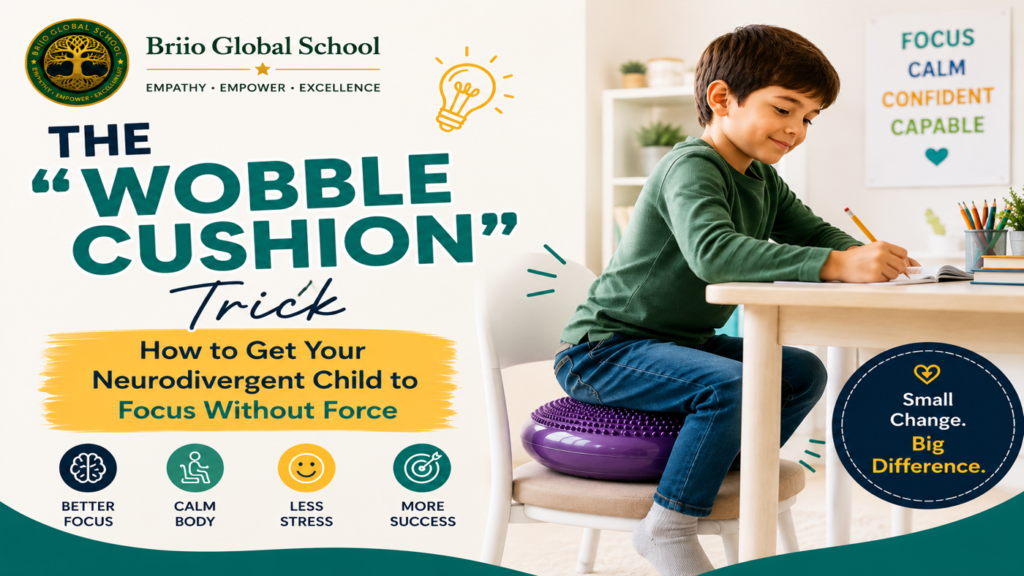
The “Wobble Cushion” Trick: How to Get Your Neurodivergent Child to Focus Without Force
Every homework session used to feel exhausting in our house. My child would slide off the chair, tap pencils constantly, bounce around the room, or lose focus within minutes. The more we reminded them to “sit properly” or “pay attention,” the more frustrated everyone became. At first, we thought the issue was behaviour. But over time, we realized something important: our child wasn’t refusing to focus. Their body simply needed movement in order for the brain to stay regulated. That’s when we discovered the wobble cushion trick — and honestly, it changed everything.
Instead of forcing stillness, we started supporting the nervous system differently. Once movement became safe and acceptable, focus improved naturally. Homework became calmer, emotional meltdowns reduced, and learning stopped feeling like a battle. If you’re parenting a child with ADHD, autism, sensory processing challenges, or other neurodivergent traits, this simple strategy may completely change the way you approach focus and learning at home.
What Is a Wobble Cushion?
A wobble cushion is a small inflatable sensory seat cushion designed to allow subtle movement while sitting. Unlike rigid chairs that force children to stay completely still, wobble cushions let the body move gently while remaining seated. For many neurodivergent children, sitting perfectly still can actually increase stress inside the body. Their nervous system craves movement to stay alert, calm, and regulated.
That’s why some children naturally focus better while rocking, bouncing a leg, shifting positions, or fidgeting during tasks. The wobble cushion works because it gives the brain movement without disrupting the activity itself and for many families, that small change creates a huge difference.
Why Traditional “Sit Still” Approaches Often Fail
Many neurodivergent children hear the same phrases repeatedly every day:
“Stop fidgeting.”
“Sit properly.”
“Focus.”
“Calm down.”
But movement is often not the problem.
In many cases, movement is actually the child’s way of regulating attention and sensory input. The more we tried to eliminate movement, the more dysregulated our child became. Once we stopped treating movement like bad behaviour, learning became far less stressful. That shift alone completely changed the emotional atmosphere inside our home.
What Changed After We Tried the Wobble Cushion
The changes weren’t dramatic overnight, but they were noticeable very quickly. Homework sessions lasted longer. Emotional frustration reduced. There was less conflict at the table. Most importantly, our child seemed calmer and more engaged during seated activities. Instead of constantly correcting behaviour, we finally had a strategy that supported the nervous system naturally. That changed everything for us as parents too. Focus no longer felt like a power struggle.
The Science Behind Movement and Focus
Many neurodivergent children process sensory input differently from neurotypical children. Small movements can help activate attention systems inside the brain while also improving emotional regulation.
This is especially common in children with:
- ADHD
- Autism
- Sensory processing challenges
Movement can help improve body awareness, reduce sensory overload, and increase attention span during learning activities. That’s why some children focus better while moving instead of sitting completely still.
The goal is not “perfect behavior.” The goal is helping the brain feel regulated enough to learn.
How to Use a Wobble Cushion Successfully
One mistake many parents make is expecting the cushion itself to magically solve focus issues. The real benefit comes when it becomes part of a calmer and more supportive environment.
What helped us most was:
- Reducing pressure during homework
- Allowing movement without shame
- Keeping instructions simple
- Using shorter work sessions
- Creating predictable routines
The wobble cushion became a regulation tool rather than a behaviour control tool. And that distinction matters deeply for neurodivergent children.
What Parents Need to Remember
If your child struggles to sit still, it does not mean they are lazy, defiant, or incapable of learning. Many neurodivergent children are working twice as hard internally just to regulate their bodies and attention. Sometimes what looks like distraction is actually sensory overload. Sometimes what looks like “bad behaviour” is nervous system dysregulation and sometimes the solution is not stricter discipline it’s support.
Final Thoughts
The wobble cushion may seem like a small thing, but for many neurodivergent children, small sensory supports can create enormous emotional and academic breakthroughs. Once we stopped forcing stillness and started supporting regulation, focus became easier, calmer, and far less emotionally exhausting for everyone involved. Because children often learn best when they feel safe enough to move, regulate, and be understood.
Need More Neurodivergent Parenting Support?
If you’re looking for practical ADHD focus strategies, sensory regulation tools, autism-friendly learning techniques, and calm parenting routines, join our parenting community for weekly guidance designed for real neurodivergent families.
💛 Because understanding your child changes everything.