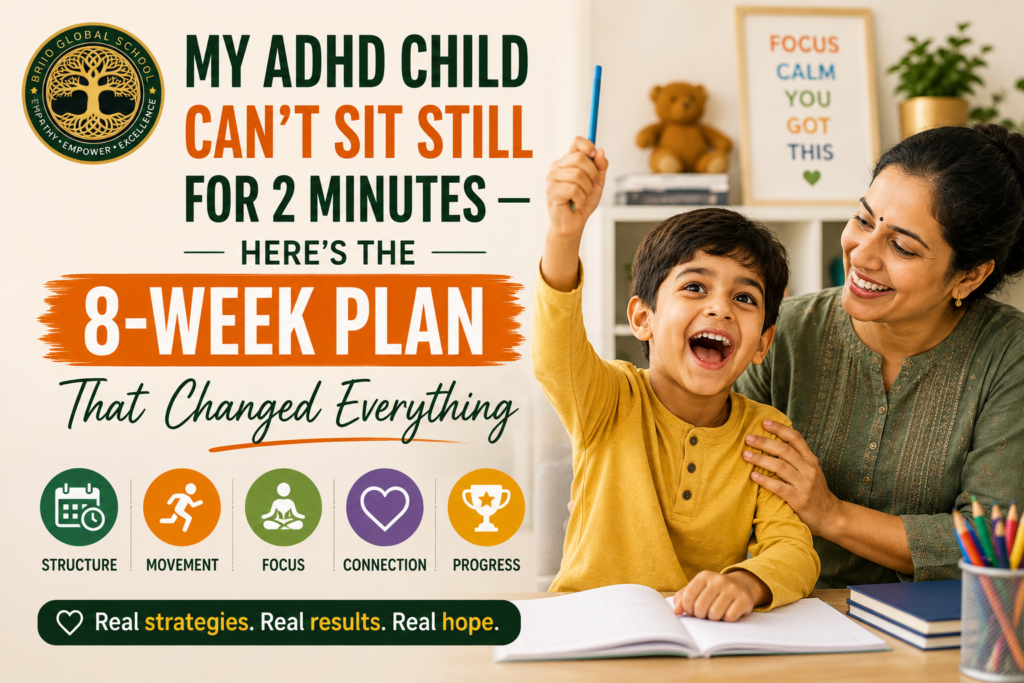
My ADHD Child Can’t Sit Still for 2 Minutes Here’s the 8-Week Plan That Changed Everything
There was a time when I couldn’t get my child to sit through breakfast without constant movement, interruptions, or emotional meltdowns.
Homework? A nightmare.
Dinner at restaurants? Impossible.
Simple conversations? Constant distractions.
As a parent, I kept asking myself: “Am I doing something wrong?”
If you’re reading this because your ADHD child can’t sit still for 2 minutes, I want you to know something important:
You are not alone — and your child is not “bad.”
Children with ADHD often struggle with impulse control, focus, emotional regulation, and hyperactivity because their brains process stimulation differently. The good news? With the right structure, consistency, and support, things can improve dramatically.
This 8-week plan completely changed our home life — and it might help yours too.
Why ADHD Kids Struggle to Sit Still ?
Before we talk about solutions, it’s important to understand why this happens.
Children with ADHD aren’t choosing chaos. Their brains crave stimulation and movement. Sitting still for long periods can actually feel uncomfortable or even painful for them.
Common signs include:
- Constant fidgeting
- Interrupting conversations
- Difficulty following instructions
- Emotional outbursts
- Trouble focusing on tasks
- Running, climbing, or moving nonstop
- Short attention spans
Many parents mistakenly respond with punishment, stricter discipline, or yelling — which often makes symptoms worse.
What ADHD children truly need is:
- Predictable structure
- Positive reinforcement
- Movement breaks
- Emotional safety
- Consistency
That’s exactly what this 8-week ADHD plan focused on.
Week 1: Stop Correcting Every Little Thing
Week 1: Stop Correcting Every Little Thing
- “Stop moving.”
- “Sit properly.”
- “Focus.”
- “Be quiet.”
Instead, I started focusing on:
- Praising small wins
- Using calm tones
- Giving shorter instructions
- Reducing negative comments
What Happened
Within days, emotional meltdowns reduced significantly. Children with ADHD respond far better to encouragement than constant correction.
Week 2: Create Predictable Daily Routines
We created a simple visual routine:
- Wake up
- Breakfast
- School
- Play
- Homework
- Dinner
- Wind-down
- Sleep
The key was consistency — not perfection.
Use:
- Visual charts
- Timers
- Checklists
- Color-coded schedules
Week 3: Introduce Movement Breaks Every 20 Minutes
Instead of forcing stillness, we embraced movement.
- Jumping jacks
- Stretching
- Dancing
- Quick walks
- Mini obstacle courses
Why It Works
Movement helps ADHD brains regulate dopamine and improve concentration. Ironically, allowing movement helped my child focus better afterward.
Week 4: Reduce Screen Overload
- Screen time limits
- Outdoor play
- Reading together
- Creative activities
- Sensory play
The Result
Better sleep, fewer tantrums, and improved attention span.
Week 5: Focus on Sleep Before Anything Else
- No screens 1 hour before bed
- Dim lighting
- Relaxing music
- Consistent bedtime
- Reading together
Biggest Improvement
Morning moods became dramatically better within a week.
Week 6: Use “Connection Before Correction”
Instead of immediately disciplining behavior, I first connected emotionally.
Examples:
- “I can see you’re frustrated.”
- “That was hard for you.”
- “Let’s calm down together.”
Week 7: Simplify Instructions
Instead of:
“Clean your room, brush your teeth, get dressed, and pack your bag.”
We used:
“First: put toys in the basket.”
Why This Works
ADHD brains can become overwhelmed quickly. Simplicity reduces frustration and increases follow-through.
Week 8: Celebrate Progress — Not Perfection
Instead of expecting “normal” behaviour overnight, we celebrated:
- 5 minutes of focus
- Calm responses
- Completed homework
- Better transitions
- Emotional regulation
Small victories became big momentum. And over time?
The child who “couldn’t sit still for 2 minutes” started:
- Finishing tasks
- Managing emotions better
- Listening more consistently
- Feeling more confident
Final Thoughts: There Is Hope
If you feel exhausted, overwhelmed, or emotionally drained, I understand. Parenting an ADHD child can feel isolating. But progress is possible. The goal isn’t to create a perfectly still child.
The goal is to help your child:
- Feel understood
- Learn self-regulation
- Build confidence
- Develop healthy routines
- Thrive in their own unique way
And sometimes, the biggest transformation starts with small consistent changes over just 8 weeks.