What Is Cognitive Behavioral Therapy (CBT)? A Beginner’s Guide
Cognitive Behavioural Therapy (CBT) is one of the most effective and widely used psychological treatments in modern mental health care. It is a structured, goal-oriented form of therapy that helps people understand how their thoughts, feelings, and behaviours are connected. CBT focuses on changing negative thinking patterns so that emotions and actions become healthier and more balanced. CBT is based on the idea that our thoughts influence how we feel, and how we feel influences how we behave. When negative thoughts become automatic, they can lead to anxiety, depression, stress, and low confidence. CBT teaches people how to recognize these thoughts and replace them with more realistic and helpful ones.
Unlike traditional talk therapy, CBT is practical and solution-focused. Instead of only discussing past experiences, CBT helps people learn skills they can use in daily life. These skills help manage stress, control emotions, and improve decision-making.
How CBT Works in Daily Life
CBT works by helping individuals notice patterns in their thinking. Many people do not realize how often they think negatively about themselves, others, or the future. These negative thoughts can create fear, anger, sadness, or hopelessness. When a person learns to question these thoughts, their emotional reaction becomes more balanced. For example, instead of thinking “I always fail,” CBT helps change the thought to “Sometimes I struggle, but I can improve.”
CBT also includes behavioural changes. This means learning new actions that support mental health, such as practicing relaxation, facing fears gradually, or improving daily routines.
Key Benefits of Cognitive Behavioural Therapy
- Helps reduce anxiety and stress
- Improves mood and emotional control
- Builds confidence and self-esteem
- Teaches problem-solving skills
- Works for both adults and children
These benefits make CBT one of the most recommended therapies by psychologists worldwide.
Common Problems CBT Can Help With
- Anxiety disorders
- Depression
- Panic attacks
- Anger issues
- Sleep problems
- Low self-confidence
- Stress at work or school
Because CBT is structured and evidence-based, it is often called the gold standard of therapy.
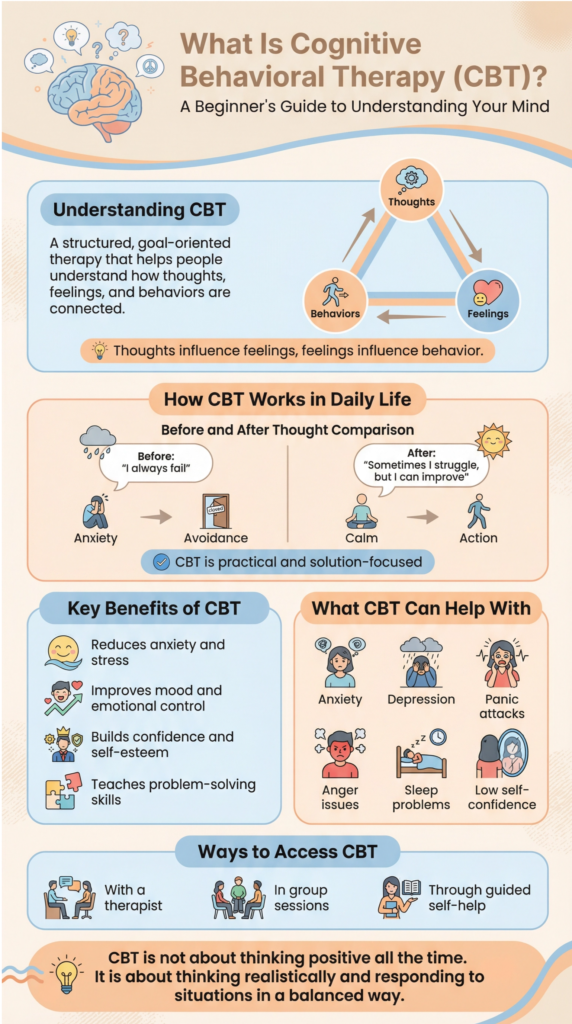
CBT can be done with a therapist, in group sessions, or even through guided self-help exercises. Many people start feeling improvement within a few weeks because the therapy focuses on practical steps instead of only talking about problems. In today’s fast-paced world, learning how to control thoughts and emotions is very important. Cognitive Behavioural Therapy gives people the tools they need to handle challenges, stay calm under pressure, and build a healthier mindset.
CBT is not about thinking positive all the time. It is about thinking realistically and responding to situations in a balanced way. When people learn this skill, they become stronger, more confident, and better able to handle life’s difficulties.