Toe-Walking in Children: When Walking on Toes Is More Than a Habit
Toe-walking in children is common when toddlers first learn to walk. During early development, children experiment with balance, coordination, and different walking patterns. However, when toe-walking continues beyond 2–3 years of age, it may require professional attention. Persistent toe-walking means a child regularly walks on the balls of their feet without placing their heels fully on the ground.Many parents assume toe-walking is simply playful behavior. While this may be true in younger toddlers, long-term toe-walking can lead to tight calf muscles, reduced ankle flexibility, poor posture, and abnormal gait patterns. Understanding the causes and early warning signs helps prevent long-term complications.
Your Attractive Heading
Persistent toe-walking can happen for several reasons. Some children develop tight calf muscles or shortened Achilles tendons, making it physically difficult to bring the heels down. Others may have sensory processing differences and prefer toe-walking because it provides extra pressure and sensory input to the muscles and joints. Balance and coordination challenges can also contribute, as walking on toes may feel more stable to certain children. In rare cases, toe-walking may be linked to underlying neurological conditions. Children who toe-walk sometimes avoid barefoot walking, dislike certain floor textures, or appear uncomfortable standing still. Over time, this walking pattern can affect overall motor development and physical endurance.
Common causes of toe-walking include:
- Muscle tightness in the calves or Achilles tendon
- Sensory processing differences
- Balance and coordination difficulties
- Habitual walking patterns
- Neurological conditions (in some cases)
Your Attractive Heading
When toe-walking persists, it can gradually impact a child’s physical development. Tight muscles limit ankle movement, which may change posture and walking alignment. The child may experience reduced endurance during daily activities and struggle with advanced motor skills.Long-term toe-walking may affect running, jumping, stair climbing, and participation in sports. It can also increase the risk of frequent tripping or falling due to reduced heel contact
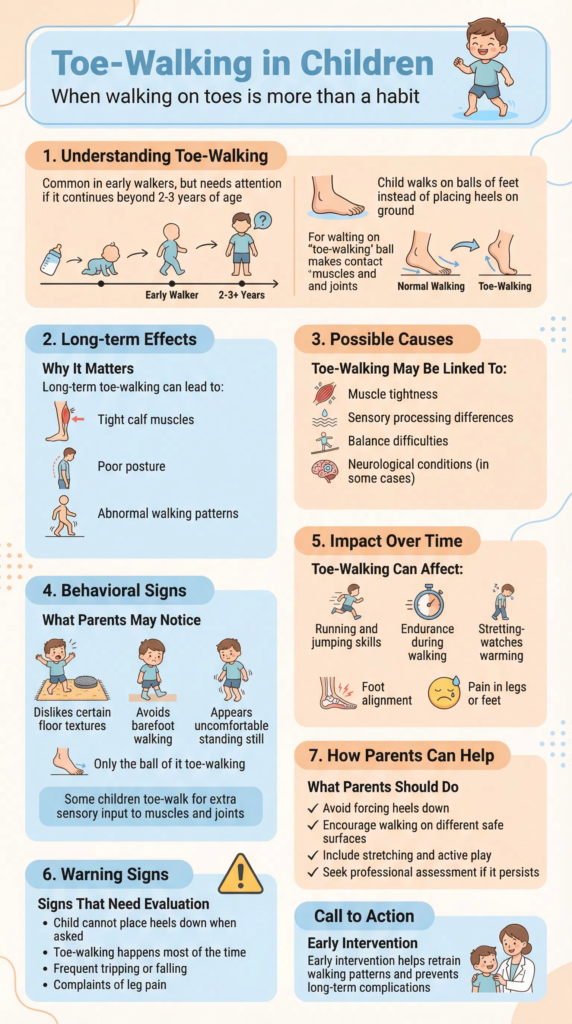
and limited stability. Some children develop leg fatigue or foot pain because of constant strain on the calf muscles. Early identification is important because delayed intervention may make correction more difficult as the child grows.
Signs Toe-Walking Needs Evaluation and What Parents Should Do
Occasional toe-walking in toddlers can be normal. However, certain signs indicate the need for professional evaluation and early intervention to correct walking patterns before complications develop.
Parents should seek guidance if they notice:
- The child cannot place heels flat on the ground when asked
- Toe-walking occurs most of the time
- Frequent tripping, falling, or balance issues
- Complaints of leg, ankle, or foot pain
- Visible tightness in calf muscles
- Toe-walking continuing beyond age three
If persistent toe-walking is observed, avoid forcing the child’s heels down, as this may cause discomfort. Instead, encourage walking on different safe surfaces such as grass, sand, or textured mats to improve sensory feedback. Include stretching exercises and active play like climbing, squatting, and jumping to strengthen leg muscles. Most importantly, consult a paediatric professional for a proper assessment if toe-walking continues. Early intervention for toe-walking in children can retrain healthy gait patterns, improve muscle flexibility, and prevent long-term posture or mobility issues. With timely support, children can develop strong, balanced movement skills that support overall growth and confidence.