Poor Balance While Standing in Young Children
(Understanding Why Some Children Fall More Often Than Others)
Standing balance is an important developmental milestone in young children. It forms the foundation for walking, running, jumping, and participating in everyday activities. When a child struggles with poor balance while standing, it can impact not only their physical movement but also their confidence and independence. Many parents become concerned when they notice their child falling more often than other children of the same age. While occasional falls are normal during early development, consistent instability may indicate underlying balance difficulties.
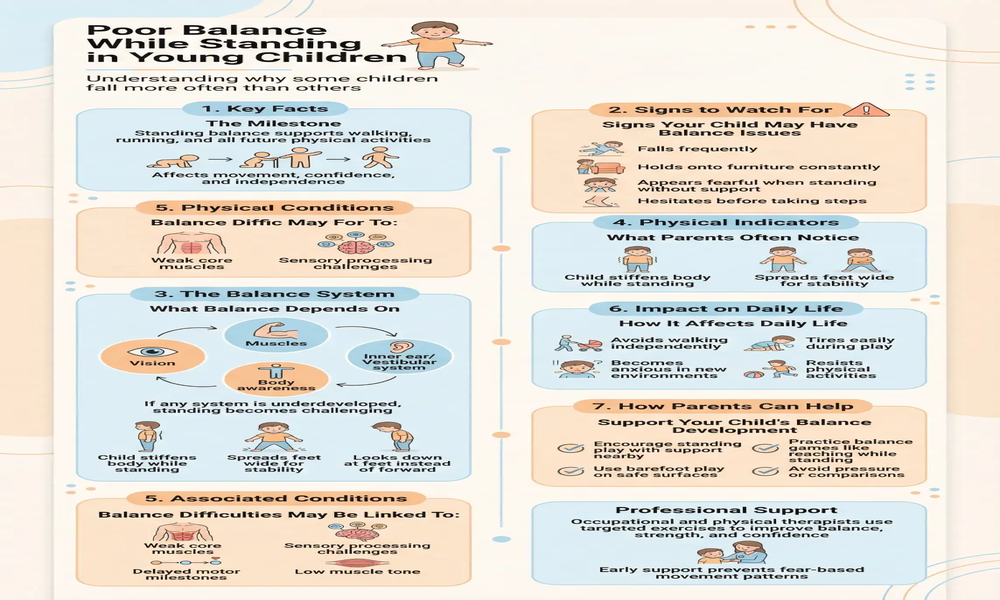
Signs of Poor Balance in Children
Children with balance challenges may show the following signs:
- Frequent falls while standing or walking
- Constantly holding onto furniture or walls
- Fearfulness when standing without support
- Hesitation before taking steps
- Standing with feet spread wide for extra stability
- Stiff body posture while trying to balance
Some children rely heavily on visual input. They may look down at their feet instead of focusing forward, which shows they are compensating for weak body awareness or vestibular processing. Recognizing these early signs of balance problems in toddlers allows parents to provide timely support.
What Causes Poor Standing Balance?
Balance is a complex skill that depends on the coordination of several body systems:
- Muscle strength, especially core muscles
- Vision for spatial awareness
- Vestibular system (inner ear balance system)
- Proprioception (body awareness)
If one or more of these systems are underdeveloped, maintaining a stable standing position becomes difficult.
Common causes of poor balance in young children include:
- Weak core muscles
- Low muscle tone
- Delayed motor milestones
- Sensory processing challenges
When these factors are present, children may struggle with overall motor development and coordination.
How Balance Difficulties Affect Daily Life
Poor balance does not only affect standing. It can influence many areas of a child’s daily routine.
A child who feels unstable may:
- Avoid walking independently
- Tire easily during play
- Resist climbing stairs or playground equipment
- Become anxious in new environments
- Avoid uneven surfaces such as grass or sand
Over time, avoiding physical activities can reduce muscle strength and further delay gross motor skills development. This can create a cycle where fear of falling limits opportunities to improve balance.
How Parents Can Help Improve Balance
Early support plays a crucial role in improving standing balance in children. Here are practical ways parents can help at home:
1. Encourage Supported Standing Play
Provide safe furniture or stable objects nearby while encouraging independent standing.
2. Practice Simple Balance Games
Activities like reaching for toys while standing or gentle weight shifting can strengthen muscles and improve coordination.
3. Allow Barefoot Play
Barefoot play on safe surfaces enhances sensory feedback and improves body awareness.
4. Avoid Pressure or Comparisons
Every child develops at their own pace. Avoid comparing your child with others, as pressure can increase anxiety and reduce confidence.
Consistency and patience are key when working on improving toddler balance skills.
When to Seek Professional Support
If balance challenges persist, consulting a professional can make a significant difference. Occupational therapists and physical therapists use targeted exercises to improve:
- Core strength
- Postural stability
- Sensory processing
- Confidence in movement
Early intervention prevents fear-based movement patterns from developing and supports healthy motor development.
Final Thoughts
Poor balance while standing in young children can affect movement, play, and confidence. However, with early recognition, supportive home strategies, and professional guidance when needed, children can develop stronger balance skills and greater independence. If you notice persistent balance difficulties, early action can make a lasting positive impact on your child’s growth and development.