CBT for Depression: 7 Proven Cognitive Behavioural Therapy Strategies to Feel Better Fast
Depression can make daily life feel slow, heavy, and overwhelming. People may lose interest in activities they once enjoyed, feel tired all the time, or develop negative thoughts about themselves and the future. One of the most effective psychological treatments for depression is Cognitive Behavioural Therapy, often called CBT. This approach focuses on changing unhealthy thinking patterns and behaviours that keep depression going. CBT is based on the idea that depression is not only about emotions. It is also connected to how we think and what we do every day. When negative thoughts repeat again and again, they influence mood, energy, and motivation. Over time, these patterns make the brain expect failure, sadness, or hopelessness even when situations can improve.
People experiencing depression often believe their thoughts are facts, but many of these thoughts are distorted. CBT teaches individuals to recognize these patterns and replace them with more balanced and realistic thinking. When thoughts change, behaviour and mood can also improve. Depression also affects daily habits. When someone feels low, they may stop doing activities, avoid social contact, or stay in bed longer. These behaviours reduce positive experiences, which makes depression stronger. CBT helps break this cycle by encouraging small actions that slowly rebuild motivation and confidence.
Common Negative Thoughts Seen in Depression
Negative thinking patterns are one of the main reasons depression continues. These thoughts may feel automatic and believable, but they are often exaggerated or unfair. Learning to notice them is the first step toward recovery.
Common negative thought patterns in depression include:
- “Nothing will ever change.”
- “I am not good enough.”
- “Everything is my fault.”
- “There is no point in trying.”
- “Things will never get better.”
These thoughts can make a person feel hopeless and stuck. CBT helps by teaching how to question these beliefs and look at situations more realistically. For example, instead of thinking “I always fail,” a person learns to say, “Sometimes I struggle, but I can improve with practice.” This process is called cognitive restructuring. It helps the brain develop healthier thinking habits, which leads to gradual emotional improvement.
CBT Techniques That Help Reduce Depression Symptoms
CBT uses practical strategies that focus on both thoughts and actions. These techniques are simple but powerful when practiced regularly. The goal is not instant happiness, but steady progress toward feeling better.
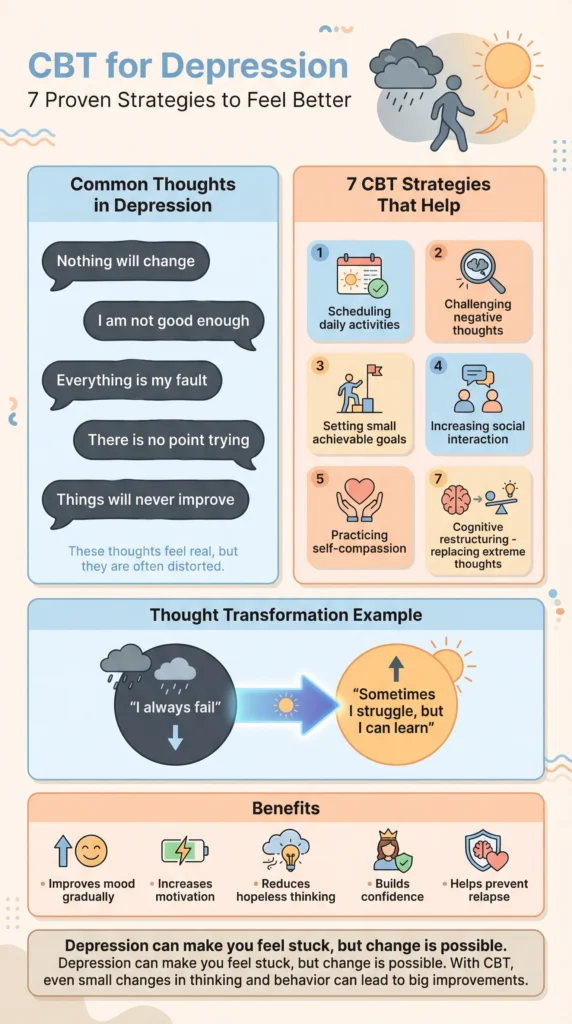
Helpful CBT strategies for depression recovery include:
- Scheduling small daily activities to increase motivation
- Challenging negative thoughts with realistic alternatives
- Setting simple and achievable goals
- Increasing social interaction step by step
- Practicing self-compassion instead of self-criticism
One important CBT method is behavioural activation. This means doing small activities even when you do not feel like it. Action often comes before motivation. When people begin to move, talk, or complete small tasks, the brain starts to produce positive chemicals again. Another key skill is learning to replace extreme thinking with balanced thinking. Instead of seeing situations as completely bad, CBT teaches how to notice both strengths and difficulties. This change in thinking reduces hopelessness and builds confidence. Research shows that CBT can improve mood, increase energy, and reduce the risk of depression returning. Because of its strong evidence, CBT is widely used by professionals in Psychology and mental health treatment.
Small Changes Can Lead to Big Improvement
Depression can make a person feel stuck, but change is possible with the right tools. CBT works step by step, helping the brain learn healthier ways to think and act. With regular practice, negative patterns become weaker and positive habits become stronger. Recovery does not happen overnight, but each small effort makes a difference. When people continue using CBT skills, they often notice better mood, more motivation, and greater confidence in handling life’s challenges.