Why Children Chew Non-Food Items: Understanding the Sensory Processing Reasons Behind This Behaviour
Chewing on non-food items like shirt collars, pencils, toys, or even fingers is a behaviour many parents notice in children. While it may seem like a simple habit or a sign of misbehaviour, it is often linked to sensory processing needs. For children with sensory challenges, this action serves a meaningful purpose rather than being random or intentional. Oral sensory input plays a powerful role in regulating the nervous system. The jaw is closely connected to how the body processes and organizes sensory information. When a child chews, they receive proprioceptive input—deep pressure that helps the brain feel more grounded and calmer. This is why chewing is commonly seen in children with conditions such as ADHD, autism, or sensory processing disorder. Instead of viewing this behaviour negatively, it is important to understand that the child is trying to meet an internal need. Recognizing this can shift the response from correction to support.
Common Sensory and Developmental Reasons Why Kids Chew on Non-Food Objects
Children engage in chewing behaviours for several underlying reasons, most of which are related to how their sensory system functions. Identifying these causes can help caregivers respond more effectively.
- Seeking calming proprioceptive input through the jaw
- Managing stress, fatigue, or overwhelming environments
- Improving focus and attention during tasks like schoolwork
- Coping with sensory overload or transitions between activities
These triggers often explain why chewing increases during specific situations, such as studying, long periods of sitting, or changes in routine.
How Chewing Helps Children Regulate Emotions, Focus, and Sensory Input
Chewing is not just a repetitive action—it directly affects a child’s ability to regulate their body and mind. The pressure created by chewing activates the nervous system in a way that can either calm or alert the child, depending on what they need at that moment. For some children, chewing provides a soothing effect that reduces anxiety and emotional overwhelm. For others, it helps maintain alertness and concentration, especially during tasks that require sustained attention. This is why a child might chew more during homework, classroom activities, or stressful situations. By fulfilling this sensory need, the child is better able to stay engaged, process information, and navigate daily challenges.
Risks of Excessive Chewing on Non-Food Items and Why It Needs Attention
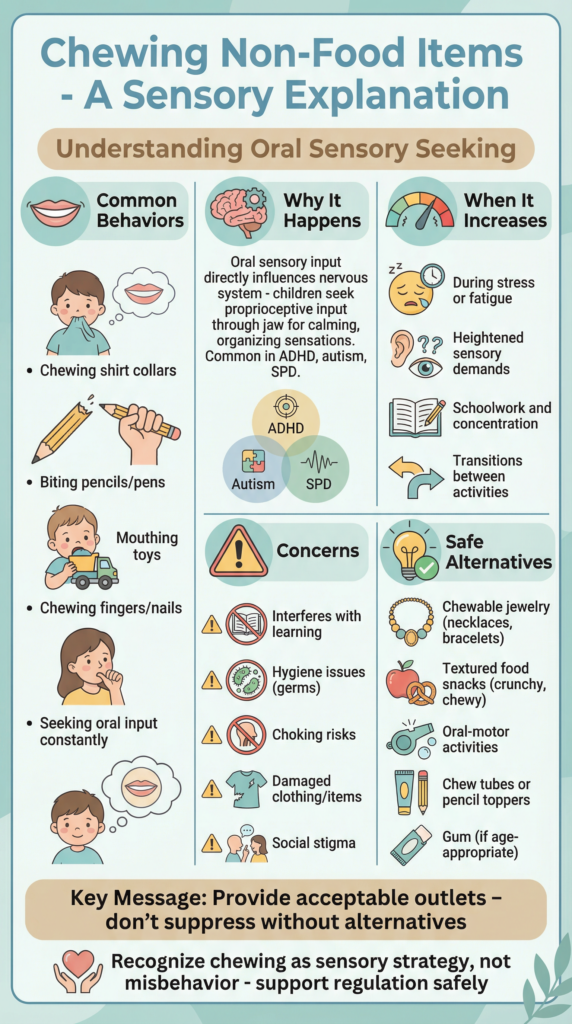
Although chewing serves a useful purpose, doing it on non-food items can create concerns. Objects like clothing, pencils, or toys are not designed for oral use and may pose health and safety risks. Excessive chewing can interfere with learning, distract from tasks, and affect hygiene. Non-food items may carry germs, increasing the risk of illness. In some cases, small or damaged objects can also become choking hazards. Because of these risks, it is important not to ignore the behaviour but also not to simply stop it without understanding its purpose.
Safe and Effective Alternatives to Replace Non-Food Chewing Behaviours in Children
Instead of suppressing chewing, caregivers can provide safe and appropriate alternatives that meet the same sensory need. This approach supports the child while reducing potential risks.
- Use chewable jewellery or specially designed sensory chew tools
- Offer textured or crunchy snacks that provide oral input
- Introduce oral-motor activities like blowing, sucking, or chewing exercises
- Create structured sensory breaks during demanding tasks
These alternatives allow children to regulate themselves in a safe and acceptable way, both at home and in school settings.
How Parents and Caregivers Can Support Sensory Needs Without Increasing Anxiety
When chewing behaviour is misunderstood and restricted without alternatives, children may experience increased anxiety or sensory dysregulation. This can lead to more intense behaviours or difficulty focusing. A supportive approach involves observing when and why the behaviour occurs, then proactively offering appropriate options. Creating a predictable routine, allowing sensory breaks, and working with professionals such as occupational therapists can make a significant difference. Understanding chewing as a sensory strategy—not a problem behaviour—empowers caregivers to respond with empathy. By meeting the child’s sensory needs safely, parents can help improve focus, emotional balance, and overall well-being.