What Is Weak Syllable Deletion in Children and Why It Causes Shortened Word Speech Patterns
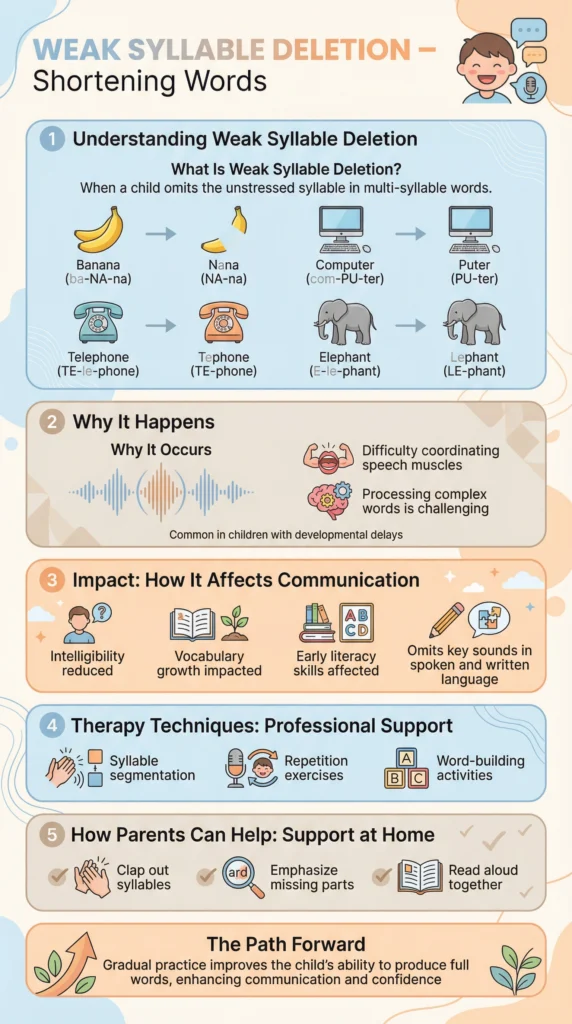
Weak syllable deletion is a common speech pattern seen in young children, especially those with developmental delays. It occurs when a child leaves out the unstressed syllable in a multi-syllable word. For example, a child may say “nana” instead of “banana” or “tephone” instead of “telephone.” While this can be a normal part of early speech development, it may persist longer in some children and require attention. In typical development, children gradually learn to pronounce longer words clearly as their speech and language skills improve. However, when weak syllable deletion continues beyond a certain age, it can affect how well others understand the child. This can lead to frustration and reduced confidence in communication. Children experiencing this difficulty may not intentionally skip parts of words. Instead, it often happens because producing longer words requires coordination of speech muscles and the ability to process complex sound patterns. When these skills are still developing or delayed, the child simplifies the word to make it easier to say.
Common Causes of Weak Syllable Deletion in Children With Developmental Delays
There are several underlying reasons why a child may consistently shorten words. Understanding these causes helps parents and caregivers respond with the right support and patience.
- Difficulty coordinating speech muscles needed for longer words
- Challenges in processing multi-syllable word patterns
- Delays in overall speech and language development
- Reduced exposure to clear and repetitive language models
These factors can make it harder for children to produce complete words, especially when they are learning new vocabulary.
How Weak Syllable Deletion Affects Speech Clarity, Vocabulary, and Early Literacy Skills
Weak syllable deletion can significantly impact a child’s intelligibility, meaning how easily others can understand their speech. When key parts of words are missing, listeners may struggle to interpret what the child is trying to say. This can lead to repeated misunderstandings and communication breakdowns. In addition to speech clarity, this pattern can slow vocabulary growth. Children may avoid using longer or unfamiliar words because they find them difficult to pronounce. Over time, this can limit their ability to express ideas fully. Early literacy skills can also be affected. Since spoken language forms the foundation for reading and writing, omitting syllables may carry over into how a child recognizes or spells words. Missing sounds in speech can translate into missing letters in writing, making learning more challenging.
Effective Speech Therapy Techniques to Correct Weak Syllable Deletion in Kids
Speech therapists use structured and engaging techniques to help children produce full words more accurately. These methods focus on breaking down words and gradually building them back up.
- Syllable segmentation to help children hear and feel each part of a word
- Repetition exercises to strengthen correct pronunciation patterns
- Word-building activities that start with simple forms and expand to full words
These techniques are often practiced in a playful and supportive environment, helping children improve without feeling pressured.
Simple Parent Strategies to Help Children Pronounce Full Words Clearly at Home
- Clap out syllables together to make word patterns more noticeable
- Emphasize missing parts of words gently when speaking
- Read aloud regularly to expose the child to correct pronunciation
Consistency and patience are essential. Encouraging children without correcting them harshly helps build confidence and motivation.
Supporting Gradual Improvement in Children with Weak Syllable Deletion for Better Communication
Improvement in speech patterns takes time, especially when it involves coordination and processing skills. With regular practice and supportive guidance, children can gradually learn to produce full words more clearly. As their speech becomes more accurate, their ability to communicate improves, leading to better social interaction and learning experiences. Increased clarity also boosts confidence, allowing children to express themselves more freely. Early recognition and consistent support can make a meaningful difference in overcoming weak syllable deletion. With the right strategies at home and, when needed, professional guidance, children can develop strong communication skills that support their overall growth.