Early Signs of Stiff Joints in Children and How Limited Flexibility Affects Daily Movement
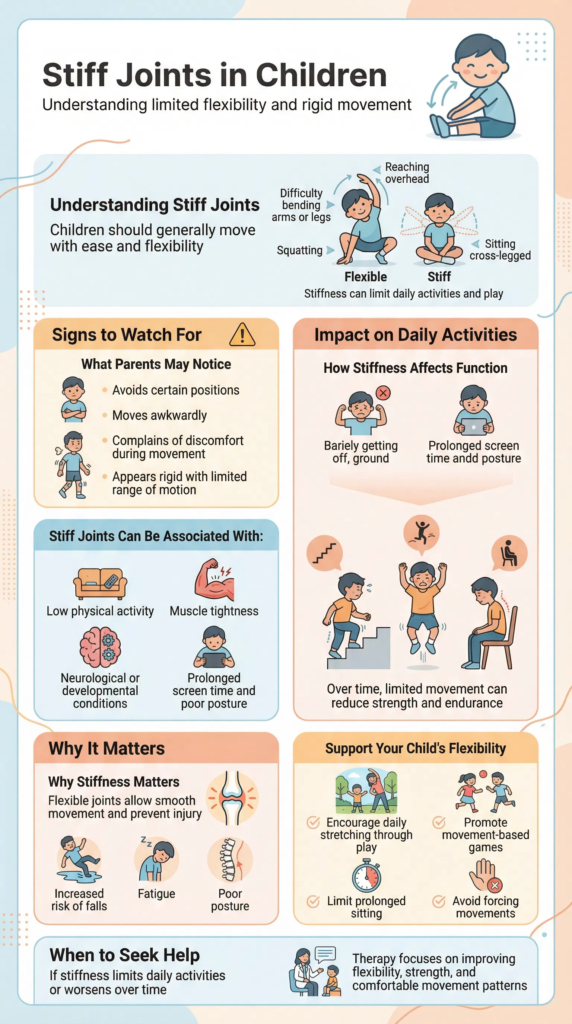
Stiff joints in children can become noticeable when simple movements start to feel difficult or uncomfortable. Parents may observe their child struggling to bend arms or legs, reach overhead, squat, or sit cross-legged. Unlike adults, children naturally have flexible and fluid movements, so any restriction in motion can be an early sign that something needs attention. Children with joint stiffness may avoid certain activities, move awkwardly, or hesitate during play. Some may appear rigid, showing a reduced range of motion while running, jumping, or even performing routine tasks. These subtle signs are often overlooked but can gradually impact a child’s confidence and physical development.
Common Causes of Stiff Joints in Children Including Lifestyle and Developmental Factors
Joint stiffness in children can arise from a variety of causes, ranging from lifestyle habits to underlying conditions. Understanding these factors helps parents take early action and provide the right support.
- Low levels of physical activity, leading to reduced joint mobility
- Muscle tightness caused by lack of stretching or movement
- Neurological or developmental conditions affecting muscle control
- Prolonged screen time and poor posture reducing flexibility
Each of these factors can limit how freely a child moves. When combined, they may increase stiffness and make everyday activities more challenging.
Why Joint Flexibility Is Important for Healthy Growth and Injury Prevention in Children
Flexible joints play a crucial role in a child’s overall development. They allow smooth, coordinated movement and help prevent strain on muscles and ligaments. When joints are stiff, children may become more prone to falls, fatigue, and poor posture. Limited flexibility can also affect functional skills such as climbing stairs, jumping, running, or even sitting comfortably in a classroom. Over time, reduced movement may lead to decreased strength and endurance, making physical activities more tiring and less enjoyable.
How Stiffness in Joints Can Impact Play, Learning, and Daily Activities in Kids
Children learn and grow through movement. When stiffness interferes with their ability to
explore, it can affect both physical and social development. A child who struggles with movement may avoid participating in games or group activities, leading to reduced interaction with peers. In school settings, stiffness can make it difficult to sit for long periods, maintain posture, or engage in physical education activities. This can impact not only physical health but also focus and classroom participation.
Simple and Effective Ways Parents Can Improve Flexibility and Reduce Joint Stiffness at Home
Parents can take practical steps to support their child’s flexibility and encourage healthier movement patterns. The goal is to make physical activity enjoyable rather than forced.
- Encourage daily stretching through fun, play-based activities
- Promote movement-based games like running, jumping, or dancing
- Limit long periods of sitting, especially screen time
- Avoid forcing movements that cause pain or discomfort
Consistency is key. Small, regular efforts can gradually improve flexibility and help children feel more comfortable in their bodies.
When to Seek Professional Help for Persistent Joint Stiffness in Children
If joint stiffness begins to interfere with daily activities or continues to worsen over time, it is important to seek professional guidance. Early assessment can help identify underlying issues and prevent further complications. Therapies are often designed to improve flexibility, build strength, and support natural movement patterns. With the right care and timely intervention, most children can regain comfort and confidence in their movements. Recognizing stiffness early and taking supportive steps can make a significant difference in a child’s physical development and overall well-being.