High Pain Tolerance in Children with Sensory Processing Disorder: What It Means and Why It Can Be Risky
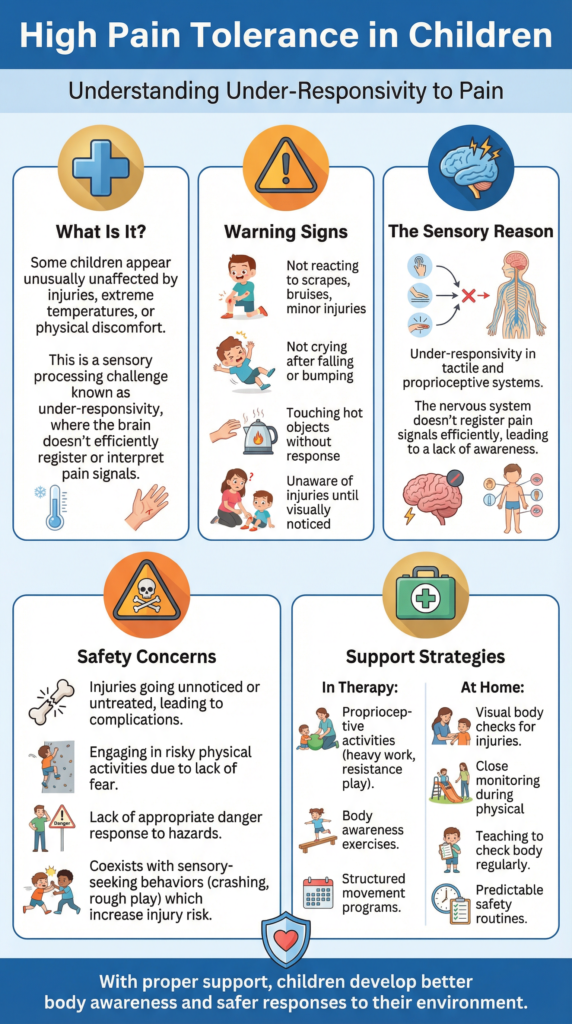
High pain tolerance in children is a lesser-known but important sensory processing challenge, often seen in children with sensory integration difficulties, autism spectrum disorder (ASD), and ADHD. Unlike children who are highly sensitive to pain, these children may appear unusually unaffected by injuries, temperature extremes, or physical discomfort. Parents may notice that their child does not cry after falling, ignores cuts or bruises, or continues playing even after getting hurt. At first, this may seem like a positive trait, but it can actually be risky. When the body does not respond clearly to pain, injuries may go unnoticed and untreated, increasing the chance of harm. Understanding the sensory reasons behind high pain tolerance helps caregivers support their child safely and effectively.
What Causes High Pain Tolerance in Children with Sensory Processing Challenges
High pain tolerance is usually linked to under-responsivity in the tactile and proprioceptive sensory systems. The tactile system processes touch and pain, while the proprioceptive system provides information about body position and movement. When these systems do not send clear signals to the brain, the child may not feel pain in the usual way. This does not mean the child cannot feel pain at all. Instead, the brain may process the signals slowly or weakly, so the child becomes aware of discomfort later than expected. Because of this delay, the child may continue activities that could cause further injury.
Common signs of high pain tolerance in children include:
- Not reacting to cuts, bruises, or minor injuries
- Minimal response to heat, cold, or physical discomfort
- Continuing play even after falling or bumping into objects
- Difficulty recognizing when the body is hurt or tired
- Engaging in intense or rough physical activities
These behaviours are not intentional. They reflect how the child’s nervous system processes sensory input differently.
Why High Pain Tolerance Is Linked to Sensory-Seeking Behaviour
Children with high pain tolerance often seek stronger sensory input to feel their body more clearly. Because their nervous system does not register sensations easily, they may look for intense experiences such as crashing into cushions, jumping from heights, or engaging in rough play. This sensory-seeking behaviour is the body’s way of trying to get enough input to feel regulated. It is not simply impulsive or reckless behaviour. The child may actually feel more comfortable and organized when they receive strong physical feedback. However, these behaviours can increase the risk of injury if not guided properly. The child may not recognize danger or may underestimate the impact of their actions. This is why supervision and structured activities are important.
Understanding this connection helps caregivers respond with safe alternatives instead of stopping the behaviour completely.
How Reduced Pain Awareness Affects Emotional Regulation and Behaviour
Pain and physical sensations provide important feedback to the brain about safety and well-being. When this feedback is unclear or delayed, the child may struggle to understand what their body needs. For example, they may not notice fatigue, hunger, or discomfort until it becomes overwhelming. This can lead to sudden emotional reactions such as irritability, meltdowns, or behavioural changes. The child may appear calm one moment and upset the next because the body signals were not recognized early. Children with high pain tolerance may also have difficulty learning from past experiences. If they do not feel the discomfort clearly, they may repeat risky behaviours without understanding the consequences. Supporting body awareness helps improve both safety and emotional control.
How Occupational Therapy Helps Improve Body Awareness and Safety
Occupational therapy plays an important role in helping children with high pain tolerance. Therapists focus on improving proprioceptive awareness so the child can better understand their body signals. Activities often include heavy work, resistance exercises, and structured movement games that provide strong and controlled sensory input. Therapists may also teach children to visually check their body for injuries, since they may not feel them immediately. Over time, this helps the child develop safer habits and better awareness of physical sensations. Consistent therapy can improve coordination, body awareness, and self-regulation, making daily activities safer and more manageable.
Simple Ways Parents Can Support Children with High Pain Tolerance at Home
Parents can create a safe and supportive environment by providing structured routines and monitoring physical activities. The goal is not to restrict movement but to guide it in a safe way.
Helpful strategies include:
- Encourage regular body check routines for cuts or bruises
- Provide supervised physical play with safe boundaries
- Use visual reminders for safety and self-awareness
- Offer structured activities like pushing, pulling, or carrying
- Maintain consistent daily routines for better regulation
These steps help children become more aware of their body and reduce the risk of unnoticed injuries.
Why Understanding Sensory Differences Helps Children Stay Safe and Confident
High pain tolerance is not a sign of strength or toughness. It is a sensory processing difference that requires understanding and support. When caregivers recognize the underlying cause, they can move from concern or confusion to effective action. With the right guidance, children can develop better awareness of their body, respond more safely to physical sensations, and participate confidently in daily activities. Supporting sensory needs allows children to grow, explore, and learn in a safe and balanced way.