Deep Pressure Seeking Behaviour in Children with Sensory Processing Issues: What It Means and Why It Helps Regulation
Deep pressure seeking behaviour is common in children who have sensory integration or sensory processing challenges. These children often look for strong, firm input to their muscles and joints because it helps their nervous system feel calm and organized. What may look like rough play, stubbornness, or attention-seeking is often the child’s natural way of trying to regulate their body. Parents may notice that the child enjoys tight hugs, squeezes into small spaces, crashes into cushions, or wraps themselves tightly in blankets. Some children prefer heavy objects, tight clothing, or weighted items. Unlike light touch, which can feel uncomfortable to sensory-sensitive children, deep pressure gives clear and steady input that helps the brain understand where the body is in space. Understanding why children seek deep pressure can help caregivers respond with support instead of stopping behaviours that the child actually needs for regulation.
What Is Deep Pressure Seeking Behaviour and Why Some Children Need It
Deep pressure seeking behaviour happens when a child looks for strong physical input to feel calm, focused, or secure. This need is connected to the proprioceptive system, which is the sensory system that tells the brain about body position, movement, and muscle use. When this system does not give clear feedback, the child may feel restless, unorganized, or overwhelmed. Firm pressure on the muscles and joints sends strong signals to the brain, helping the nervous system feel more grounded. This is why some children feel better after tight hugs, pushing heavy objects, or lying under a heavy blanket. The pressure gives the body the information it needs to feel stable and in control.
Common deep pressure seeking behaviours include:
- Asking for tight hugs or squeezing others
- Crashing into cushions, beds, or soft furniture
- Wrapping tightly in blankets or pillows
- Enjoying weighted blankets or heavy objects
- Sitting in small or enclosed spaces
- Pushing, pulling, or carrying heavy things
These behaviours are not usually signs of misbehaviour. They are often the child’s way of calming their nervous system.
How Proprioceptive Input Helps the Nervous System Feel Calm and Organized
The proprioceptive system works through muscles and joints. Every time we push, pull, lift, or squeeze something, the body sends messages to the brain about how much force is being used and where the body is positioned. For children with sensory processing differences, these signals may be weak or confusing, which can make them feel restless or out of control. Deep pressure provides strong and steady input, which helps the brain organize these signals.
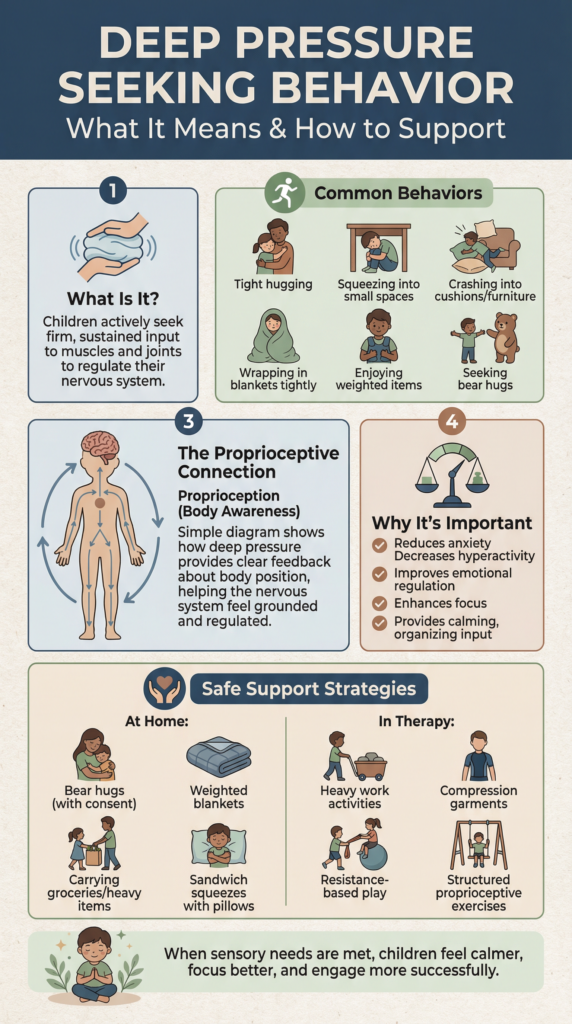
This is why deep pressure often has a calming effect. Many children become less anxious, less hyperactive, and more focused after activities that involve pushing, lifting, or squeezing. Without enough proprioceptive input, a child may seem overly active, impulsive, or emotional. When the sensory need is met, the child often shows better attention, improved mood, and more controlled behaviour. This is why therapists often use deep pressure activities as part of sensory integration therapy.
Why Deep Pressure Seeking Is Often Misunderstood as Rough Play or Attention-Seeking
Deep pressure seeking behaviour can sometimes look like the child is being rough, careless, or overly physical. For example, a child may hug too tightly, bump into others, or jump onto furniture. Adults may think the child is trying to get attention or break rules, but the child may actually be trying to feel calm. When the sensory system is not well regulated, the child may not know how to control the amount of force they use. They are not trying to cause trouble. Their body simply needs stronger input than usual to feel comfortable. If these needs are ignored or punished, the child may become more restless or emotional. When the need is understood and given in a safe way, behaviour often improves naturally. Supporting sensory needs helps the child learn better self-control.
Safe Ways Parents Can Support Deep Pressure Needs at Home
Providing safe and planned activities can help children get the deep pressure input they need without unsafe behaviour. These activities are often called heavy work or resistance activities because they involve muscles and joints working against pressure.
Helpful ways to support deep pressure needs include:
- Give firm hugs only when the child wants them
- Let the child carry books, bags, or groceries
- Use weighted blankets under guidance
- Encourage pushing, pulling, or climbing games
- Allow the child to wrap in blankets or cushions
- Try obstacle courses with crawling and jumping
These activities help the nervous system feel more organized and calmer.
How Occupational Therapy Helps Children with Deep Pressure Seeking Behaviour
Occupational therapists often work with children who show strong sensory seeking behaviours. Therapy may include sensory integration activities, resistance play, compression exercises, and movement games that give the body the input it needs. The goal is to help the child feel regulated so they can focus, learn, and interact comfortably. When caregivers understand deep pressure seeking, they can respond with support instead of frustration. Meeting sensory needs in a safe and structured way helps children feel calmer, more confident, and better able to handle daily activities. Over time, this support allows the child to develop stronger self-regulation skills and improved emotional control.