Slow Running Speed in Children: Why Some Kids Struggle to Keep Up with Peers During Play and Sports
Running is an important part of childhood development. It may look simple, but running actually requires coordination, balance, strength, endurance, and proper motor planning. Most children naturally improve their running speed between the ages of 2 and 5 years as their muscles grow stronger and their movements become more coordinated. When a child consistently runs slower than other children of the same age, it may be an early sign of motor development challenges rather than lack of effort. Parents often notice slow running during outdoor play, school activities, or sports. The child may lag behind while playing tag, tire quickly during running games, or avoid activities that involve chasing or racing. Some children look hesitant while running, while others move in an awkward or stiff way. These signs can indicate that the child’s body is still developing the strength and coordination needed for efficient movement. Understanding the reasons behind slow running speed helps parents support their child without pressure or comparison.
Why Running Speed Is an Important Developmental Skill in Early Childhood
Running is a complex gross motor skill that requires the brain and body to work together smoothly. The child must coordinate arm and leg movements, keep balance while moving fast, and use enough muscle strength to push the body forward. Running also needs endurance so the child can continue moving without getting tired too quickly. As children grow, their running becomes faster and more controlled. This improvement allows them to participate in playground games, sports, and group activities with confidence. When running skills develop slowly, the child may feel less confident in physical play and may avoid activities that other children enjoy.
Running helps develop several important physical abilities:
- Coordination between arms and legs
- Leg strength and core stability
- Balance while moving at speed
- Muscle endurance for longer activity
- Motor planning for smooth body movement
If these skills are weak, the child may run slowly, lose balance easily, or become tired faster than peers.
Common Reasons Why Some Children Run Slower Than Others
Slow running speed is often linked to coordination difficulties, weak muscles, or balance problems. Some children cannot synchronize their arm and leg movements properly, which makes running look stiff or unsteady. Others may have low muscle strength, so they cannot push off the ground with enough power. Balance insecurity is another common reason. When a child does not feel stable while moving fast, they may take short and careful steps instead of running freely. Motor planning difficulties can also play a role. The brain may take longer to organize the movement pattern needed for smooth running.
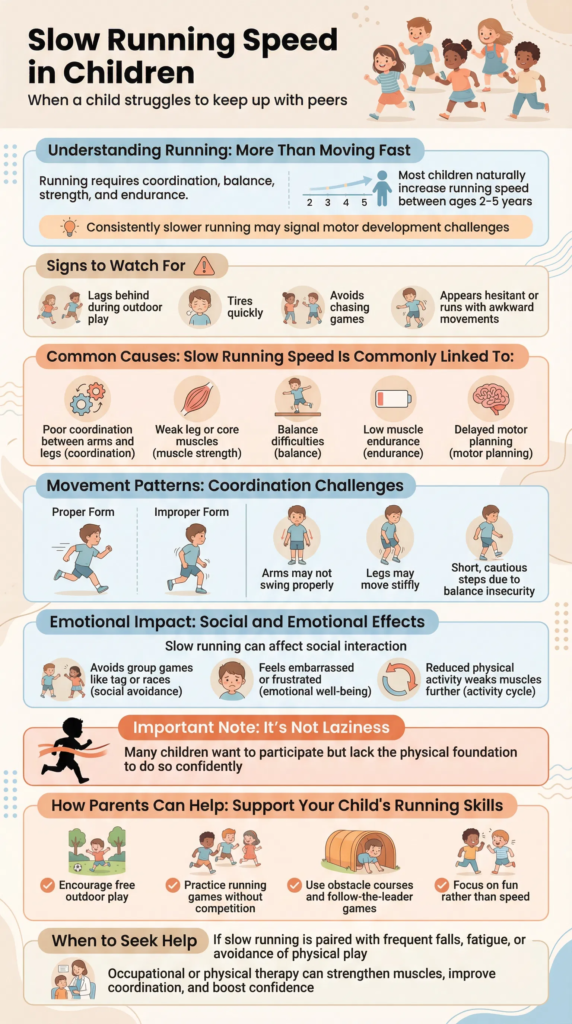
Children with slow running speed may show signs such as:
- Lagging behind during outdoor play
- Getting tired quickly while running
- Stiff or awkward arm and leg movements
- Frequent tripping or loss of balance
- Avoiding chasing or racing games
These signs do not mean the child is lazy. Many children want to play but feel frustrated because their body cannot move as easily as they expect.
How Slow Running Speed Can Affect Confidence, Play, and Social Interaction
Running is part of many childhood games, including tag, football, races, and playground activities. When a child cannot keep up with friends, they may feel embarrassed or left out. Some children start avoiding group play because they worry about being slower than others. Avoidance can lead to less physical activity, which makes muscles weaker and coordination slower to develop. Over time, this cycle can affect both physical fitness and self-confidence. Children who feel unsure about their movement may also hesitate to try new sports or outdoor activities. Encouraging safe and enjoyable movement helps children build skills without feeling pressured to compete.
Simple Ways Parents Can Help Improve Running Skills at Home
Parents can support running development by creating opportunities for active play in a fun and relaxed way. Children learn best when they feel safe and enjoy the activity instead of focusing on speed or performance.
Helpful ways to support running skills include:
- Encourage daily outdoor play in open spaces
- Play running games without competition
- Use obstacle courses to build strength and balance
- Try follow-the-leader games with different movements
- Praise effort instead of comparing with other children
Regular play helps strengthen muscles and improves coordination naturally.
When Parents Should Seek Professional Help for Slow Running Speed
If slow running is combined with frequent falls, poor balance, quick fatigue, or avoidance of physical play, a professional evaluation may be helpful. Occupational therapists and physical therapists can assess strength, coordination, and motor planning skills. Therapy uses playful exercises to build muscle power, improve balance, and teach the body how to move more smoothly. With early support, many children become faster, stronger, and more confident in physical activities. Developing these skills helps children participate fully in play, sports, and everyday life.