Messy Play Avoidance in Sensory-Sensitive Children: Why Some Kids Refuse Paint, Sand, Slime, and Sticky Textures
Messy play is an important part of early childhood development. Activities like playing with paint, sand, slime, water, or food textures help children explore the world through their senses. These experiences support creativity, motor skills, emotional expression, and learning. However, for sensory-sensitive children, messy play can feel uncomfortable or even frightening instead of fun. Some children refuse to touch glue, avoid finger painting, cry when their hands get dirty, or immediately ask to wash after touching something sticky. Parents may think the child is being fussy, stubborn, or overly neat, but the reaction is often related to sensory processing difficulties. The child’s nervous system reacts strongly to certain textures, making messy play feel overwhelming rather than enjoyable. Understanding the sensory reasons behind messy play avoidance helps parents support their child without forcing them into stressful situations.
Why Sensory-Sensitive Children Avoid Messy Play Activities
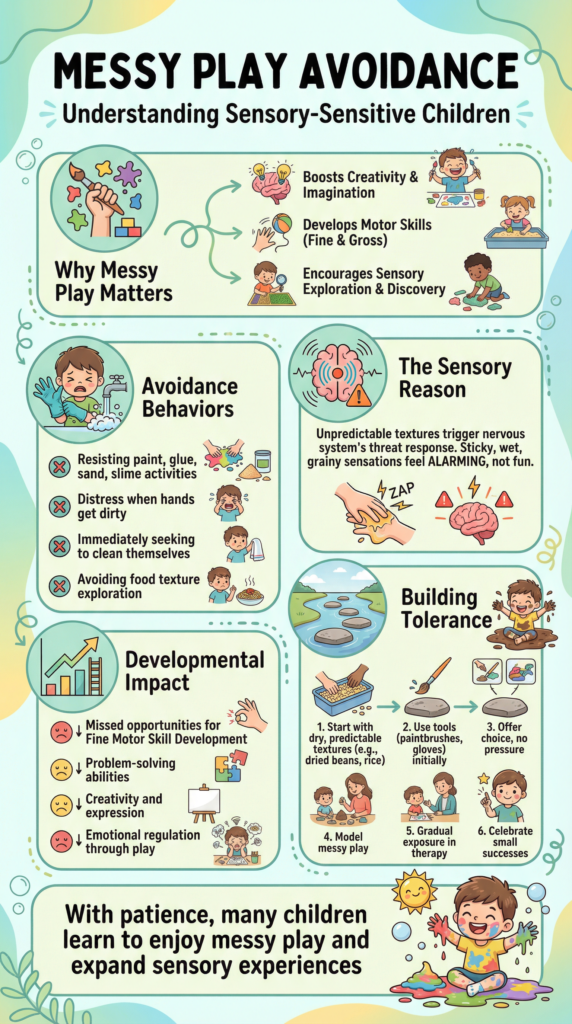
Children who avoid messy play often have tactile defensiveness, which means their sense of touch is over-responsive. The skin constantly sends sensory information to the brain about texture, temperature, and pressure. In some children, the brain interprets these signals as too intense, even when the sensation is mild. Sticky, wet, grainy, or slippery textures can trigger a strong discomfort response. The child may feel unsafe, irritated, or anxious when touching unfamiliar materials. Because messy play involves unpredictable sensations, the child cannot prepare for what they will feel, which makes the reaction even stronger.
Common signs of messy play avoidance include:
- Refusing to touch paint, glue, slime, or sand
- Getting upset when hands become dirty or sticky
- Wanting to wash hands repeatedly during activities
- Avoiding food textures like dough, rice, or mashed foods
- Preferring clean, dry, and predictable play materials
- Becoming distressed during craft or sensory activities
These reactions are protective responses from the nervous system, not behaviour problems. The child is trying to avoid sensations that feel uncomfortable or alarming.
How Avoiding Messy Play Can Affect Development and Learning Skills
Messy play is more than just fun. It helps children develop important skills needed for school and daily life. When children explore different textures, they strengthen fine motor skills, improve hand control, and learn how to plan movements. Sensory play also supports creativity, problem-solving, and emotional expression. Children who avoid messy activities may miss opportunities to practice these skills. For example, playing with clay strengthens hand muscles needed for writing, while finger painting helps with coordination and creativity. Sensory play also teaches children how to tolerate new experiences, which is important for confidence and independence. Avoidance can also affect social participation. Many preschool and classroom activities involve crafts, painting, or sensory tables. A child who refuses these activities may feel different from peers or may stay away from group play.
Over time, this can affect self-confidence and willingness to try new things. Helping children slowly become comfortable with messy play allows them to build both sensory tolerance and developmental skills.
Gentle Ways Parents Can Help Sensory-Sensitive Children Enjoy Messy Play
Children with sensory sensitivity need gradual exposure, not pressure. Forcing messy play can increase anxiety and make the child more resistant. A better approach is to introduce textures slowly and allow the child to feel in control of the activity.
Supportive strategies that help children become more comfortable include:
- Start with dry and predictable textures before wet ones
- Let the child watch others play before joining
- Use tools like brushes, spoons, or gloves at first
- Offer choices so the child feels in control
- Keep playtime short and positive
- Praise effort instead of forcing participation
When the child feels safe, the nervous system becomes less reactive, and tolerance improves over time.
How Sensory Integration Therapy Helps Children Tolerate Different Textures
When messy play avoidance is strong or affects daily activities, sensory integration therapy can help. Occupational therapists use playful, structured activities to help the brain process sensory input more comfortably. Therapy usually starts with textures the child can tolerate and slowly introduces new ones in a safe and controlled way. These activities help the nervous system learn that different sensations are not dangerous. As the child gains confidence, they become more willing to touch, explore, and participate in messy play. Progress may be slow, but consistent support leads to improvement. With patience, understanding, and the right guidance, many sensory-sensitive children learn to enjoy messy play. As their comfort grows, they also develop stronger motor skills, better confidence, and a greater willingness to explore the world around them.