Clothing Texture Aversion in Kids: Understanding Sensory Processing and Tactile Sensitivity
Clothing texture aversion in kids is a common sensory challenge, especially in children with developmental delays or sensory processing differences. What may appear as stubbornness, picky behaviour, or refusal to get dressed is often a genuine neurological response. Children with tactile sensitivity experience clothing in a very different way, and even soft fabrics can feel irritating or overwhelming. This difficulty is often linked to challenges in the body’s sensory system, particularly the sense of touch. In children with Sensory Processing Disorder or Autism Spectrum Disorder, the brain may react strongly to sensations that most people barely notice. Tags, seams, tight waistbands, or rough fabrics can send signals that feel uncomfortable or even painful. Because clothing stays on the body all day, the discomfort can become constant, making it hard for the child to focus, relax, or participate in daily activities.
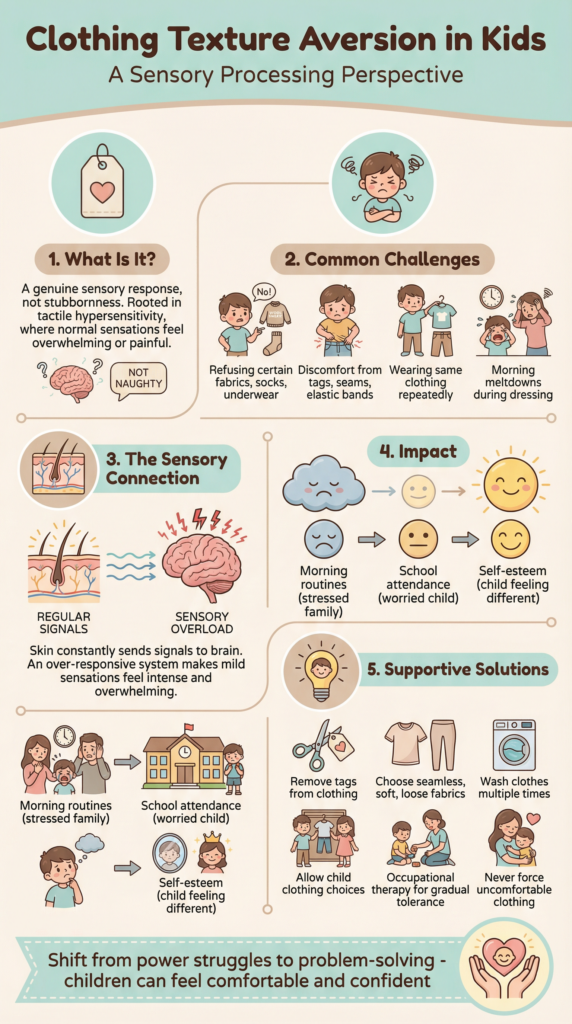
Some children refuse to wear certain fabrics, avoid socks or underwear, or insist on wearing the same outfit repeatedly. This is not because they want to be difficult, but because familiar clothing feels predictable and safe. When the nervous system is over-responsive, the brain tries to avoid sensations that feel threatening, even if the clothing is harmless. Clothing aversion can affect daily routines in many ways. Getting dressed in the morning may lead to meltdowns, arguments, or delays. School uniforms or seasonal clothing can create stress, and children may feel embarrassed if they cannot tolerate what their peers wear. Over time, these struggles can affect confidence and independence.
It is important to understand that children cannot simply “ignore” sensory discomfort. Forcing them to wear clothing that feels overwhelming often increases anxiety and makes the sensory response stronger. Supportive strategies work better when they focus on comfort, choice, and gradual adjustment rather than pressure.
Signs of Clothing Texture Aversion in Children
Parents may notice patterns that suggest the child is reacting to sensory discomfort rather than being oppositional. Recognizing these signs helps caregivers respond with understanding instead of frustration.
Common signs of clothing texture sensitivity in kids include:
- Refusing to wear certain fabrics, socks, or tight clothing
- Complaining about tags, seams, waistbands, or collars
- Wanting to wear the same outfit every day
- Becoming upset during dressing or changing clothes
- Removing clothing frequently because it feels uncomfortable
These reactions occur because the tactile system sends constant information to the brain through the skin. When the nervous system is overly sensitive, even mild sensations can feel intense. This makes clothing feel like a constant irritation that the child cannot escape. Because dressing happens every day, repeated sensory distress may lead to anxiety, resistance, or emotional outbursts. Children may also worry about school or social situations where they cannot control what they wear.
Practical Ways to Help Children With Clothing Sensitivity
Parents can make daily routines easier by adjusting clothing choices and creating a sensory-friendly environment. Small changes often reduce stress and help the child feel more comfortable in their body.
Helpful sensory-friendly clothing strategies for children include:
- Choosing soft, seamless, and loose-fitting fabrics
- Removing tags or buying tag-free clothing
- Washing clothes several times to make them softer
- Allowing the child to choose what feels comfortable
- Introducing new clothing gradually instead of forcing it