Asymmetrical Movements in Children: When a Child Favours One Side of the Body
Asymmetrical movements in children occur when a child consistently uses one side of the body more than the other. While it is normal for hand preference to develop between the ages of three and five, strong one-sided use at a very early age may indicate underlying developmental challenges. Balanced movement is important for coordination, posture, and overall brain development, so noticing early signs of asymmetry can help parents provide the right support.Children naturally explore movement using both sides of their bodies. Crawling, reaching, climbing, and playing all help strengthen muscles equally. When one side becomes dominant too soon, the other side may not get enough practice to develop strength and coordination. Over time, this imbalance can affect motor skills, learning readiness, and confidence in physical activities.
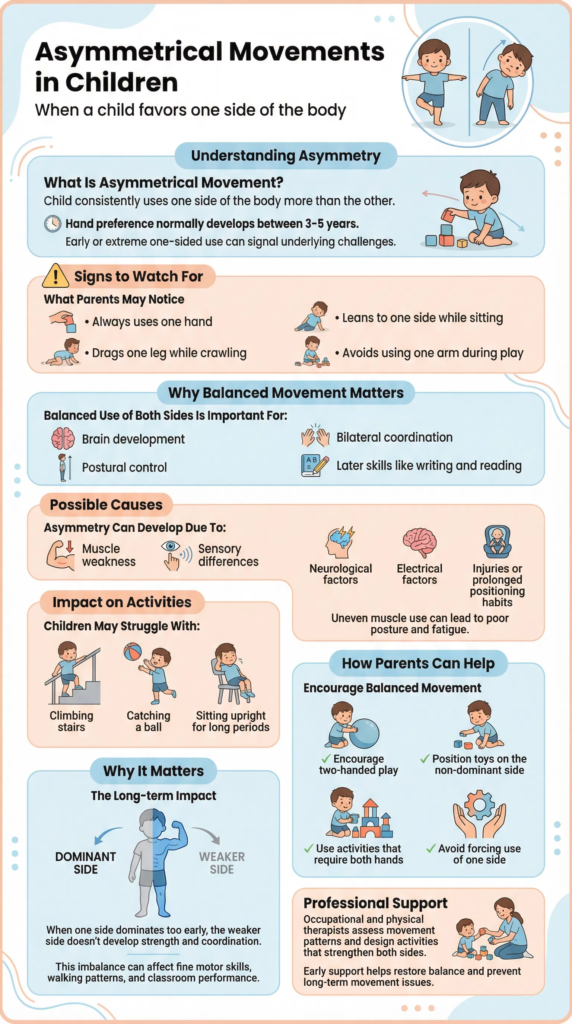
Parents may first notice asymmetrical movement during simple daily activities. A child may always reach with the same hand, drag one leg while crawling, or lean to one side while sitting. Some children avoid using one arm during play or seem less stable when standing or walking. These patterns can affect balance, endurance, and the ability to perform tasks that require both sides of the body to work together. Balanced use of both sides is closely connected to how the brain develops. Each side of the brain controls the opposite side of the body, so symmetrical movement supports strong communication between the two hemispheres. This connection is important for later skills such as reading, writing, and coordinated play. Asymmetrical movement patterns can develop for several reasons. Muscle weakness on one side, sensory processing differences, or neurological factors may make one side easier to use. In some cases, habits formed during infancy, such as always turning the head to one side or spending long periods in the same position, may also contribute to uneven development. Injuries or reduced physical activity can also lead to one side becoming stronger than the other.
Signs That a Child May Have Asymmetrical Movement Patterns
Parents and teachers can often notice uneven body use during play and daily routines. Recognizing these signs early allows for simple activities that encourage more balanced development.
Common signs of asymmetrical movements in children include:
- Using one hand almost all the time before age three
- Dragging one leg or pushing more with one side while crawling
- Leaning to one side when sitting, standing, or walking
- Avoiding the use of one arm during play activities
- Difficulty with balance, stair climbing, or catching a ball
When these patterns continue over time, the weaker side of the body may not develop the strength needed for everyday tasks. This can affect posture, endurance, and coordination. Children may tire easily when sitting upright in class or struggle with activities that require both hands, such as cutting with scissors or holding paper while writing. Asymmetry can also affect confidence. Children who feel less stable or less coordinated may avoid physical play, which further limits opportunities to build strength. Early support helps prevent these patterns from becoming long-term habits.
Activities That Help Encourage Balanced Body Use
Parents can support symmetrical movement through simple, playful activities at home. The goal is to give both sides of the body equal opportunities to move, reach, and work together. Gentle encouragement is more helpful than forcing the child to use a specific side.
Helpful activities to improve bilateral coordination in children include:
- Encouraging games that require two hands, such as building blocks or ball play
- Placing toys on the less-used side to encourage reaching
- Practicing crawling, climbing, and obstacle courses
- Using activities like clapping, catching, or pulling objects
- Allowing free movement instead of restricting positions for long periods
These activities strengthen muscles on both sides of the body and improve coordination between the brain’s left and right hemispheres. If asymmetrical movement continues or interferes with daily activities, professional support may be helpful. Specialists trained in Occupational Therapy and Physical Therapy evaluate movement patterns and create exercises that improve strength, balance, and coordination.
Early guidance can help children develop more even movement, better posture, and stronger motor skills. With consistent practice and supportive activities, most children can learn to use both sides of their body more comfortably, leading to improved confidence in play, school, and everyday life.