Weak Grip Strength in Children: Causes, Signs, and Practical Ways to Improve Hand Strength
Grip strength is an important part of a child’s physical development. It allows children to hold objects, manipulate tools, and perform everyday tasks independently. From holding toys and crayons to using utensils and scissors, strong hand muscles are essential for smooth and coordinated movement. When a child has weak grip strength, even simple activities can become tiring and frustrating. Parents may notice that their child drops objects frequently or avoids tasks that require holding tools for longer periods. Activities like colouring, writing, eating with a spoon, or opening containers may appear difficult. Some children use both hands for tasks that usually require one hand, while others constantly switch hands because their muscles fatigue quickly. These signs often indicate that the small muscles of the hands and fingers are not yet strong enough to support sustained activity.
Grip strength develops gradually during early childhood through active movement and play. Crawling, climbing, pushing, pulling, and squeezing objects all help strengthen the muscles of the hands and arms. Children who had limited tummy time during infancy, delayed crawling, or reduced opportunities for physical play may develop weaker hand muscles. In some cases, weak grip strength is also linked to low muscle tone or challenges with motor coordination.
Weak hand strength does not only affect playtime. It can also influence a child’s ability to complete school tasks and daily routines comfortably. When the muscles of the hand tire quickly, children may struggle with endurance during writing or drawing. As a result, they may press too hard on paper, hold tools awkwardly, or stop activities sooner than expected. Over time, this can affect their confidence and willingness to participate in learning activities.
Weak hand strength does not only affect playtime. It can also influence a child’s ability to complete school tasks and daily routines comfortably. When the muscles of the hand tire quickly, children may struggle with endurance during writing or drawing. As a result, they may press too hard on paper, hold tools awkwardly, or stop activities sooner than expected. Over time, this can affect their confidence and willingness to participate in learning activities.
Signs That May Indicate Weak Grip Strength in Children
Parents and teachers often notice specific patterns when a child is struggling with hand strength. Recognizing these signs early can help support the child before frustration or avoidance develops.
Common signs of weak grip strength in children include:
- Difficulty holding crayons, pencils, or markers for long periods
- Frequent dropping of toys, utensils, or school tools
- Struggles with fine motor tasks like buttoning, zipping, or tying shoelaces
- Difficulty using scissors or opening containers
- Fatigue or discomfort during writing and drawing activities
Children with weak grip strength sometimes compensate by gripping tools very tightly or positioning their fingers incorrectly. While this may help them maintain control temporarily, it often leads to hand fatigue and messy handwriting.
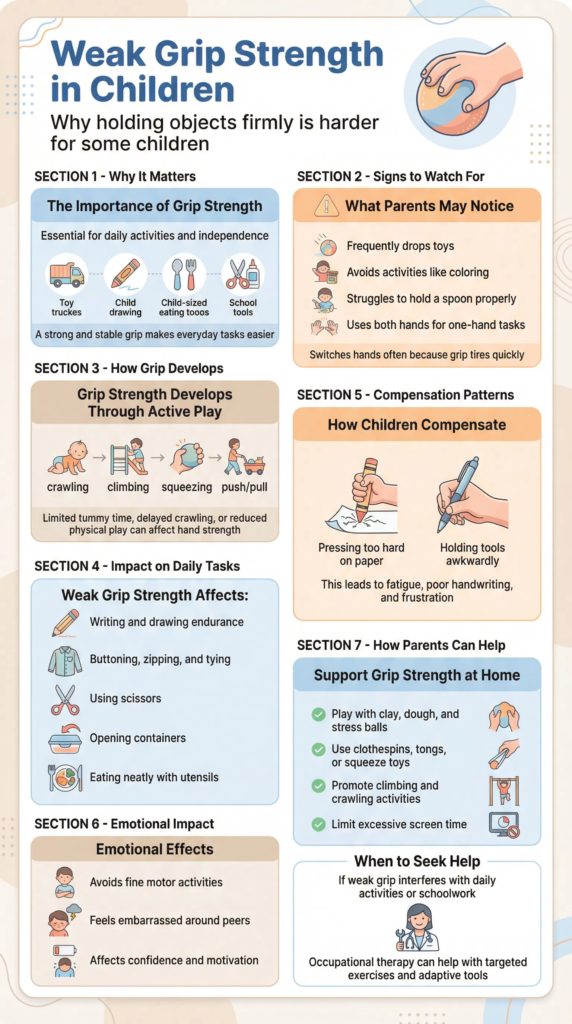
Beyond physical challenges, weak hand strength can also influence emotional well-being. Children who struggle with fine motor tasks may avoid colouring, crafts, or classroom work that requires writing. When they see peers completing tasks more easily, they may feel embarrassed or lose motivation to try.
Simple Home Activities to Strengthen a Child’s Grip
The good news is that grip strength can improve with regular practice and playful activities. Children develop stronger hands when they engage in tasks that involve squeezing, pulling, and manipulating objects. Incorporating these activities into everyday play helps strengthen muscles without making the child feel pressured.
Helpful grip strengthening activities for children include:
- Playing with clay, therapy putty, or dough to encourage squeezing and rolling
- Using clothespins, tweezers, or kitchen tongs during games or chores
- Offering squeeze toys, stress balls, or sponge toys for hand exercises
- Encouraging climbing, crawling, and playground activities
- Reducing excessive screen time and increasing hands-on play
These activities strengthen the small muscles of the hands while improving coordination and control.
When Professional Support May Help
If weak grip strength continues to interfere with daily activities or school performance, professional support may be helpful. Paediatric specialists trained in Occupational Therapy often work with children who experience fine motor challenges. Through structured exercises and playful activities, therapists help children develop stronger hand muscles and better coordination. With consistent practice, encouragement, and supportive environments, most children gradually improve their grip strength. As their hand muscles grow stronger, everyday tasks such as writing, dressing, and playing become easier and more enjoyable.