Touch Sensitivity and Autism: Understanding Sensory Responses in Children
Touch sensitivity is one of the most common sensory processing challenges in children with autism spectrum disorder. Many children on the autism spectrum experience differences in how their nervous system interprets tactile information. Because touch is a fundamental sensory system, these differences can influence behaviour, emotional regulation, communication, and everyday routines. Every child with autism has a unique sensory profile. Some children experience tactile hypersensitivity, where everyday touch sensations feel overwhelming or uncomfortable. Others show tactile seeking behaviours, where they actively look for strong sensory input to help regulate their bodies. Understanding these responses helps parents and caregivers provide supportive environments rather than misinterpreting sensory reactions as behavioural problems.
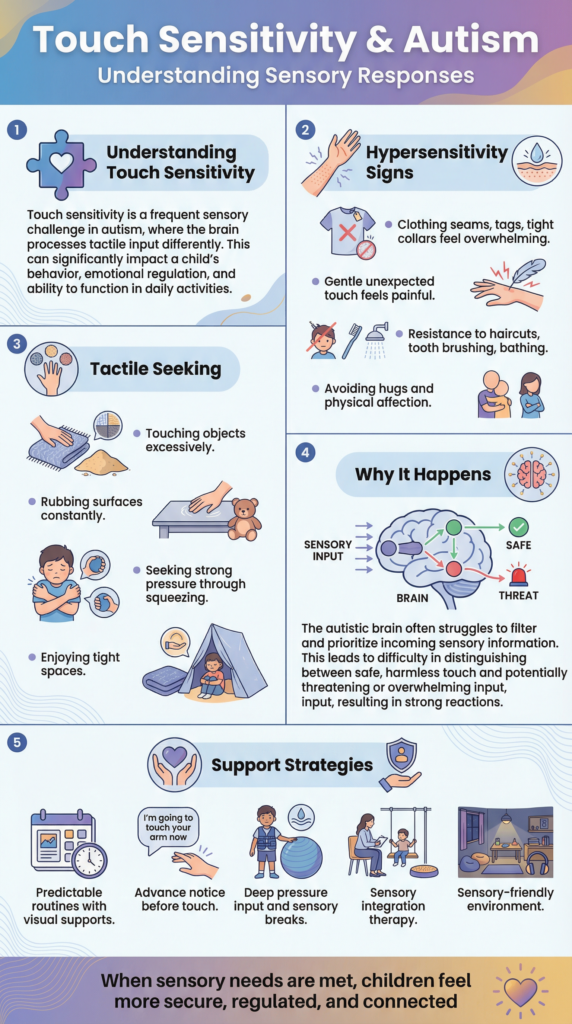
Children with touch sensitivity often struggle with clothing textures. Seams, tags, tight collars, or rough fabrics can feel irritating or painful. Even light touch—such as a tap on the shoulder—may trigger discomfort. This can cause children to avoid certain clothes, remove socks frequently, or become upset during dressing routines. Daily hygiene and grooming activities can also be challenging. Tasks like hair brushing, nail trimming, tooth brushing, or bathing involve multiple sensory inputs, including touch, sound, and movement. For a child with a sensitive nervous system, these combined sensations may create sensory overload, leading to crying, resistance, or meltdowns.
Touch sensitivity may also influence social interactions. Many children with autism avoid hugs, holding hands, or close physical contact. This behaviour is often misunderstood as emotional withdrawal. In reality, the child may want connection but struggles with the physical sensation of touch. At the neurological level, these sensory differences are linked to how the brain processes and filters sensory signals. The tactile system helps us detect danger, but in children with autism, this system may remain highly alert. As a result, harmless touch can be interpreted as a threat, activating the body’s stress response.
Common Signs of Touch Sensitivity in Children with Autism
Parents, teachers, and caregivers may observe several behavioural and sensory responses when a child experiences tactile sensitivity. Recognizing these signs can help identify sensory triggers and guide supportive strategies.
Common touch sensitivity symptoms in autism include:
- Strong discomfort with clothing seams, tags, or certain fabrics
- Avoidance of grooming activities such as haircuts or nail trimming
- Distress when touched unexpectedly or lightly
- Resistance to hugs, hand-holding, or close physical contact
- Avoidance of messy play involving paint, sand, glue, or food textures
Some children display the opposite pattern and actively seek intense tactile input. They may rub surfaces, squeeze objects, crash into furniture, or enjoy tight spaces. These behaviours help regulate their sensory system and should be redirected toward safe alternatives rather than discouraged.
Support Strategies for Managing Tactile Sensitivity
Helping children manage tactile sensitivity involves creating predictable routines and providing sensory-friendly environments. Small adjustments in daily routines can significantly reduce stress and help children feel more comfortable. Therapists frequently recommend Sensory Integration Therapy, a specialized approach used in occupational therapy. Through structured play activities, therapists gradually introduce different textures and sensations, allowing the child’s nervous system to learn how to process touch more comfortably.
Parents and caregivers can also support children with autism sensory processing challenges through practical strategies such as:
- Choosing soft, tag-free clothing and allowing children to select comfortable fabrics
- Providing advance notice before touching the child or starting grooming routines
- Introducing messy play slowly with preferred textures first
- Offering deep pressure activities such as weighted blankets or compression clothing
- Creating calm sensory breaks during busy or overwhelming situations
Deep pressure input is often calming for children with tactile sensitivity because it provides predictable sensory feedback to the nervous system.
Building Sensory Comfort and Emotional Security
Touch sensitivity in autism can influence daily routines, social interactions, and emotional regulation. However, with understanding and supportive strategies, children can gradually build tolerance to sensory input and feel more secure in their environments. When caregivers respond with patience and empathy instead of forcing touch experiences, children learn to trust their surroundings. Over time, therapeutic support, structured routines, and sensory-friendly environments can help children with autism participate more comfortably in family life, school activities, and social relationships.