Why Taking Longer to Crawl Matters More Than Parents Realize?
Crawling is one of the most significant milestones in early childhood development, typically emerging between 6 to 10 months of age. While some families are reassured that “skipping crawling is normal,” research in developmental science and paediatric therapy suggests that delayed or absent crawling can influence a child’s physical, sensory, and neurological foundations in subtle but important ways.
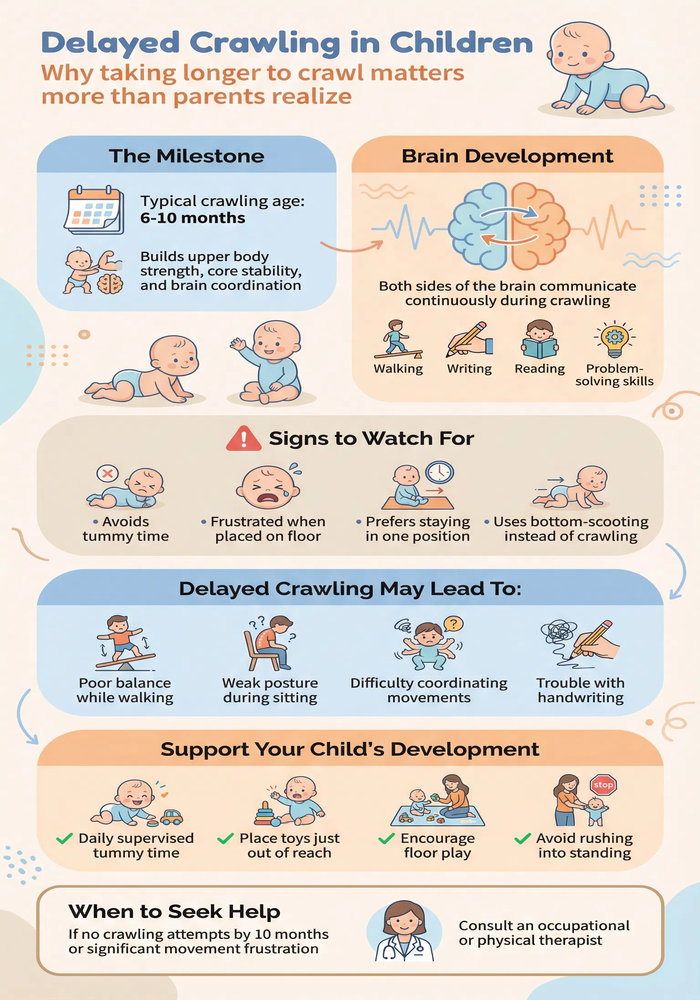
Crawling is not just about moving from one place to another. It is a full-body developmental workout. When a baby crawls, they strengthen their shoulders, arms, hands, and core muscles. At the same time, they develop balance, stability, and coordination between the left and right sides of the body. This cross-lateral movement pattern supports communication between both hemispheres of the brain, building pathways that later support walking, handwriting, reading fluency, visual tracking, and even problem-solving skills.
Why Crawling Supports Brain Development
During crawling, the right arm moves forward with the left leg, and vice versa. This coordinated movement requires integration between both sides of the brain. These early neural connections lay the groundwork for complex tasks in later childhood. Skills such as copying from the board, tying shoelaces, maintaining posture while sitting, and organizing thoughts during writing all depend on this early integration.
When crawling is delayed, children may miss opportunities to build these essential neurological connections. While many children who skip crawling appear to walk normally, underlying weaknesses in coordination or endurance may show up later during school years.
Signs of Delayed or Atypical Crawling
A child with delayed crawling may:
- Prefer staying in one position for long periods
- Depend heavily on adults to move them
- Move quickly into sitting or standing without sufficient core strength
- Avoid tummy time
- Become easily frustrated during floor play
- Use alternative patterns such as bottom-scooting instead of crawling
These patterns often indicate weak shoulder stability, reduced core strength, low or high muscle tone, or challenges in motor planning (the brain’s ability to plan and execute movement).Importantly, delayed crawling is never about laziness. It may be linked to muscle tone differences, limited tummy time exposure, sensory sensitivities, or fewer opportunities for free floor movement.
Possible Long-Term Effects
When foundational strength and coordination are not fully developed, children may later experience:
- Poor balance while walking or running
- Difficulty coordinating complex movements
- Slouched posture during sitting
- Reduced endurance in classroom tasks
- Challenges with fine motor skills such as handwriting
These concerns often become more noticeable during preschool or early school years when motor demands increase.
How Parents Can Support Crawling Development
Parents play a powerful role in encouraging healthy motor development. Here are practical steps:
- Encourage supervised tummy time daily to build shoulder and core strength.
- Place toys slightly out of reach to motivate reaching and forward movement.
- Promote floor play instead of prolonged use of walkers, swings, or restrictive seating devices.
- Avoid rushing into standing or walking before adequate strength develops.
- Model movement by getting down on the floor and engaging face-to-face.
Consistency matters more than intensity. Short, frequent floor sessions throughout the day are more beneficial than occasional long sessions.
When to Seek Professional Support
If a child is not attempting to crawl by 10 months, shows strong resistance to tummy time, uses only one side of the body consistently, or becomes highly distressed during movement, consulting an occupational therapist or physical therapist is recommended. Early intervention strengthens muscles, improves coordination, and builds movement confidence before patterns become ingrained.
Crawling may seem like a simple milestone, but it is a powerful foundation for lifelong motor and learning skills. Supporting it early can prevent challenges later and empower children to explore their world with strength and confidence.