8 Common Cognitive Distortions and How to Fix Them Using CBT Techniques for Better Mental Health
Cognitive distortions are patterns of thinking that make situations seem worse, more negative, or more extreme than they actually are. These thinking mistakes are a central focus in Cognitive Behavioural Therapy (CBT) because they strongly influence emotions, behaviour, and overall mental health. When these distorted thoughts become automatic, they can lead to anxiety, stress, low confidence, and even depression. Everyone experiences negative thoughts from time to time, but problems arise when these thoughts repeat frequently and feel like facts. The good news is that once you learn to recognize cognitive distortions, you can begin to change them. This awareness is the first step toward developing healthier thinking patterns and improving emotional well-being.
What Are Cognitive Distortions and Why They Affect Your Thoughts and Emotions
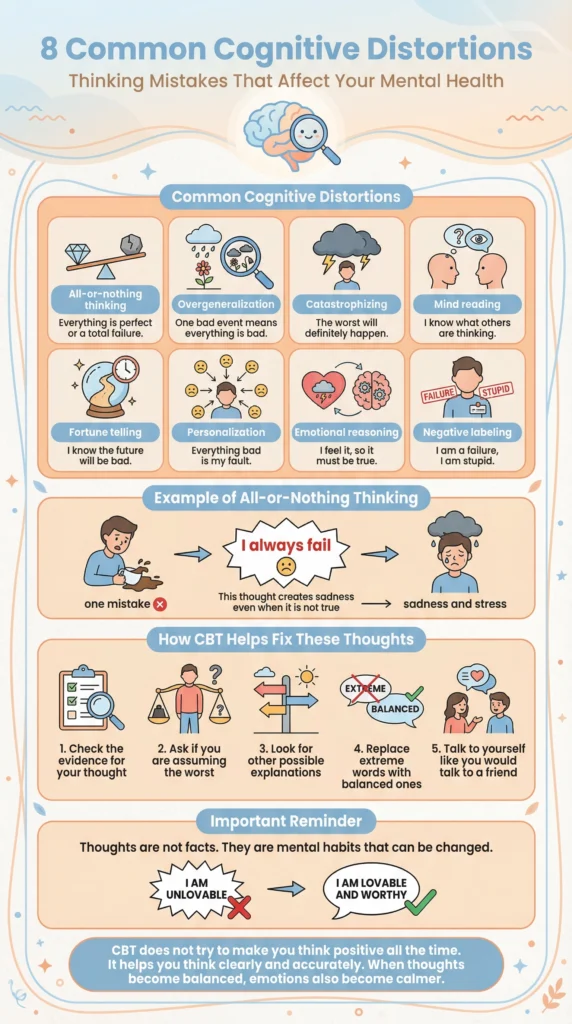
Cognitive distortions are mental shortcuts the brain uses to quickly interpret situations. While they may seem helpful at times, they often exaggerate problems or ignore positive aspects of reality. These thoughts feel real, but they are usually inaccurate or incomplete. For example, if you make a small mistake and immediately think, “I always fail,” your brain is using a distorted thinking pattern. This thought can create feelings of sadness, frustration, or anxiety, even though the situation may not be as serious as it seems. Over time, repeated negative thinking patterns can shape how you see yourself and the world. They can lower self-esteem, increase stress, and make it harder to take positive action. Recognizing these distortions helps you separate facts from assumptions and respond more calmly to challenges.
List of 8 Common Cognitive Distortions That Negatively Impact Mental Health
Understanding the most common cognitive distortions makes it easier to identify them in your daily life. These patterns often happen automatically, but with practice, you can learn to notice and challenge them.
- All-or-nothing thinking (seeing things as completely good or bad)
- Overgeneralization (believing one event represents everything)
- Catastrophizing (expecting the worst possible outcome)
- Mind reading (assuming others think negatively about you)
- Fortune telling (predicting failure without evidence)
- Personalization (blaming yourself for things beyond your control)
- Emotional reasoning (believing feelings are facts)
- Negative labelling (giving yourself harsh and fixed labels)
These distortions may feel true in the moment, but they are often based on assumptions rather than reality.
How Cognitive Distortions Create Anxiety, Stress, and Low Confidence
When distorted thoughts repeat frequently, they can create a cycle of negative emotions and behaviours. For example, if you believe “Everyone is judging me,” you may feel anxious in social situations and avoid interacting with others. This avoidance then reinforces the belief, making it stronger over time. Similarly, catastrophizing can make small problems feel overwhelming, leading to stress and fear. Emotional reasoning can make you believe that feeling anxious means something bad will happen. These patterns can reduce confidence and make everyday challenges seem more difficult than they actually are. The key point is that thoughts influence feelings, and feelings influence actions. Changing your thinking can help break this cycle.
Simple CBT Techniques to Identify and Fix Cognitive Distortions in Daily Life
CBT focuses on helping you question and replace distorted thoughts with more balanced and realistic ones. The goal is not to think positively all the time, but to think clearly and accurately.
You can start using these simple techniques in your daily life:
- Check the evidence for your thought and ask if it is fully true
- Question whether you are assuming the worst outcome
- Look for alternative explanations or viewpoints
- Replace extreme words like “always” or “never” with balanced ones
- Talk to yourself in a kind and supportive way
For example, instead of thinking “I always fail,” you can say, “I made a mistake, but I can learn and improve.” This shift may seem small, but it can reduce stress and increase motivation.
How Changing Thought Patterns Improves Emotional Health and Confidence
When you practice identifying and correcting cognitive distortions, your brain gradually learns new thinking habits. Over time, you begin to respond to situations with more clarity and less emotional intensity. This leads to reduced anxiety, better decision-making, and improved self-confidence. One of the most empowering realizations is that thoughts are not facts. They are mental patterns that can be changed with practice. By learning to question and adjust these patterns, you gain more control over your reactions and emotions. The more consistently you apply these techniques, the easier it becomes to handle challenges calmly. This not only improves mental health but also helps you build a more balanced and confident outlook on life.