Backing in Speech Development: When “Dog” Becomes “Gog”
Speech sound development is a gradual process, and many pronunciation errors are a normal part of early childhood. However, some patterns are less typical and may require attention. One such pattern is backing in speech development, where a child replaces front sounds like /t/ and /d/ with back sounds such as /k/ and /g/. For example, a child may say “gog” instead of “dog.” Backing is considered the opposite of fronting. While fronting is common in toddlers, backing is less frequent and can significantly affect speech clarity. Understanding this phonological process in children helps parents identify when support may be needed.
What Is Backing in Children’s Speech?
Backing occurs when a child substitute sounds produced at the front of the mouth with sounds made at the back. Front sounds like /t/, /d/, and /n/ require the tongue to touch the ridge behind the upper teeth. Back sounds like /k/ and /g/ are produced by lifting the back of the tongue toward the soft palate. In children with speech sound disorders, the brain or oral muscles may find front sounds harder to coordinate. As a result, the child chooses a sound that feels easier to produce. This sound substitution pattern in speech is not typically part of normal developmental stages and may signal a phonological delay. Because these substitutions change the meaning of words, backing can reduce speech intelligibility in children. Listeners may struggle to understand what the child is trying to say, especially in connected speech.
Why Backing Can Affect Communication
Clear speech is essential for vocabulary growth, learning, and social participation. When backing errors persist, children may experience repeated misunderstandings. This can lead to frustration, reduced confidence, and reluctance to speak in group settings. Over time, consistent pronunciation difficulties in children may impact peer interactions. A child who is frequently asked to repeat themselves might withdraw from conversations or avoid speaking situations altogether. Early identification of backing speech errors can prevent long-term communication challenges. Children are often aware when others do not understand them. Supporting speech clarity early strengthens both language development and emotional wellbeing.
Signs Parents Should Notice
Recognizing backing patterns early makes intervention more effective. Parents do not need to diagnose the issue themselves, but noticing consistent substitutions can guide timely evaluation.
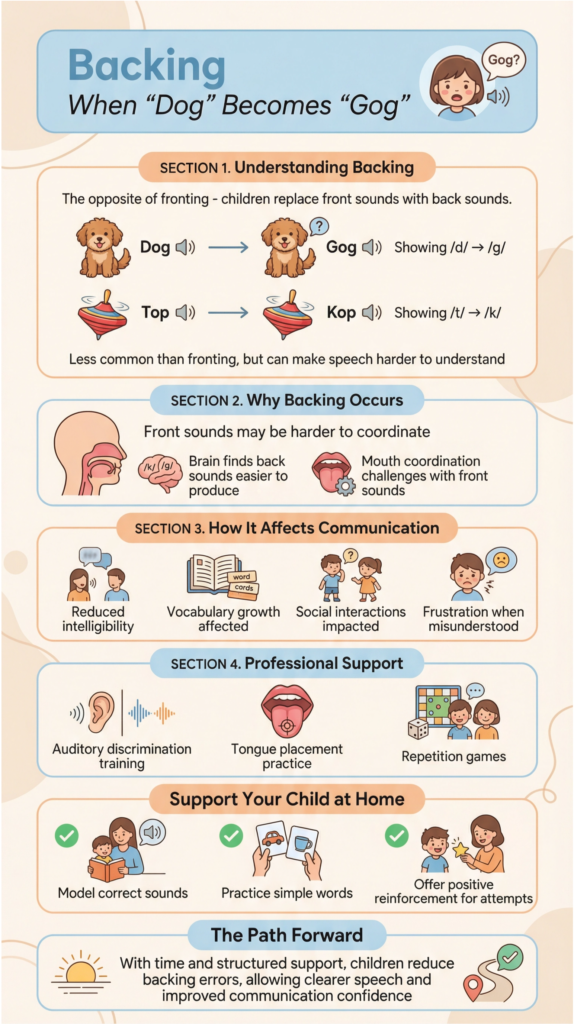
Common signs of backing in children include:
- Saying “gog” instead of “dog”
- Replacing /t/ with /k/ in words like “tea” becoming “key”
- Consistent back sound substitutions across many words
- Speech that is difficult for unfamiliar listeners to understand
- Frustration during conversations
If these patterns continue beyond the early preschool years, consulting a speech-language professional is recommended.
Effective Speech Therapy Techniques for Backing
The good news is that backing in speech sound disorders responds well to structured therapy. A speech-language pathologist will assess the child’s articulation patterns and design targeted activities to improve front sound production.
Evidence-based speech therapy techniques for backing include:
- Auditory discrimination training to help children hear the difference between front and back sounds
- Direct tongue placement practice using visual and tactile cues
- Minimal pair exercises such as “tea” versus “key”
- Repetition games to strengthen correct sound patterns
- Gradual progression from single sounds to words and sentences
Parents play a vital role in reinforcing therapy at home. Modelling clear pronunciation, practicing simple target words daily, and offering positive reinforcement for speech attempts can significantly improve progress. Gentle correction—without criticism—helps build confidence.
Long-Term Outlook for Children with Backing
With consistent support, most children reduce backing errors and develop clearer speech patterns. Early intervention for phonological disorders improves overall communication skills and boosts social confidence. As children master front sounds and reduce sound substitution errors, their intelligibility improves. This leads to smoother conversations, stronger peer relationships, and greater participation in learning environments. Backing may make speech harder to understand, but with structured guidance and encouragement, children can overcome this challenge and communicate with clarity and confidence.