Tactile Defensiveness in Children: Causes, Signs, and Support Strategies
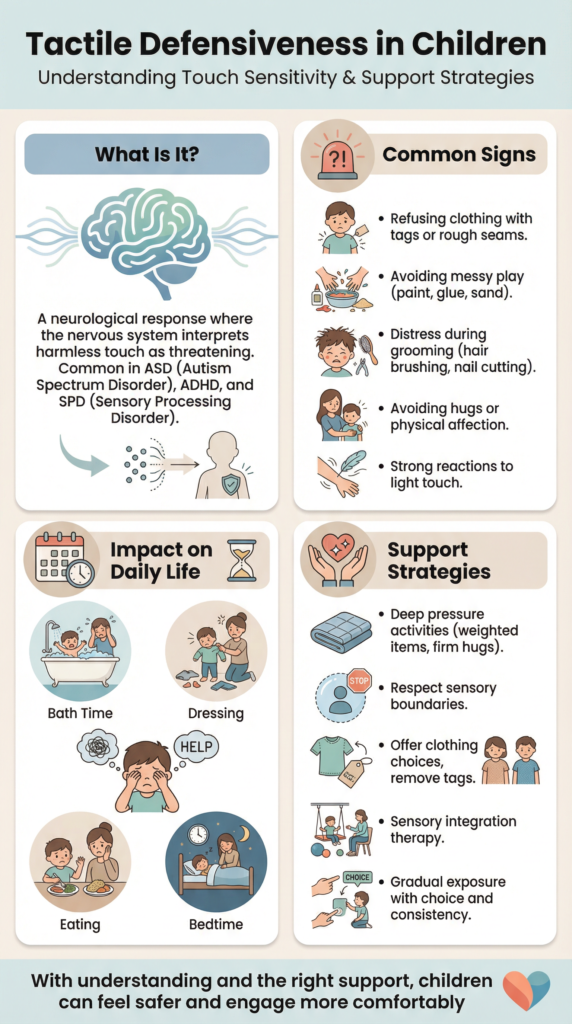
Tactile defensiveness in children is a common sensory integration difficulty seen in children with developmental delays, Autism Spectrum Disorder (ASD), ADHD, and Sensory Processing Disorder (SPD). It occurs when a child’s nervous system interprets normal touch sensations as threatening or overwhelming. Even light, harmless touch may trigger distress. Importantly, tactile defensiveness is neurological—not behavioural—and understanding this difference is key to providing effective support.
The tactile system helps us detect temperature, texture, pain, and pressure. In some children, this system becomes overly sensitive. The brain reacts as if everyday touch is dangerous, activating a fight-or-flight response. As a result, children may withdraw, become anxious, show aggression, or shut down emotionally during routine activities.
Signs and Symptoms of Tactile Defensiveness
Children with tactile defensiveness often react strongly to common daily experiences. Clothing tags, seams, tight socks, or certain fabrics may feel unbearable. Getting dressed can turn into a daily struggle. Grooming tasks like hair brushing, nail trimming, or face washing may cause meltdowns because these sensations overwhelm the sensory system. Light touch is usually the biggest trigger. A gentle tap on the shoulder may feel irritating or even painful. In contrast, some children tolerate deep pressure better because it is more organizing to the nervous system. Tactile defensiveness can also affect play and social development. Many children avoid messy play involving paint, glue, sand, mud, or food textures. While messy play supports sensory development, creativity, and fine motor skills, these children experience it as unpredictable and unsafe. Physical affection may also become complicated, as hugs and close contact can feel overwhelming rather than comforting.
Common signs of tactile defensiveness include:
- Strong reactions to clothing textures, tags, or seams
- Distress during grooming activities like hair brushing or nail cutting
- Avoidance of messy play or certain food textures
- Discomfort with light touch but preference for deep pressure
- Emotional meltdowns during routine activities
- Avoidance of physical affection or close contact
Over time, repeated sensory distress can affect self-esteem, independence, and participation in school or community settings. Daily routines such as bathing, dressing, eating, and bedtime may become stressful for both the child and caregivers.
Causes and Brain Processing Differences
The root cause of tactile defensiveness lies in how the brain processes sensory input. The tactile system is designed to protect us from harm. However, in children with sensory processing challenges, this protective system becomes overactive. The brain misinterprets harmless touch as a threat, triggering a stress response. This neurological response explains why reasoning, discipline, or forcing compliance does not resolve the issue. The child is not being “difficult”; their nervous system is overwhelmed. Recognizing tactile defensiveness as a sensory processing disorder helps parents and teachers respond with empathy rather than frustration.
Support Strategies for Tactile Defensiveness
Early intervention is important for helping children regulate their sensory responses. Sensory integration therapy, provided by an occupational therapist, uses structured, play-based activities to gradually help the nervous system tolerate and process touch more effectively. Deep pressure activities are often calming because they organize the sensory system more efficiently than light touch.
Parents and caregivers can support children at home with practical strategies such as:
- Removing clothing tags and offering soft, comfortable fabric choices
- Creating predictable daily routines to reduce anxiety
- Introducing messy play gradually with choice and control
- Using deep pressure activities like weighted blankets or firm hugs (with consent)
- Respecting sensory boundaries instead of forcing touch
Consistency, patience, and gradual exposure are essential. Forcing a child to tolerate uncomfortable sensations often increases anxiety and resistance. With the right sensory support strategies and professional guidance, children with tactile defensiveness can learn to feel safer in their bodies. Over time, improved sensory regulation enhances confidence, independence, and participation in daily life.